How to Fix Duplicate Product Descriptions at Scale (2026 Guide)
Thousands of duplicate product descriptions hurting SEO? Learn scalable strategies to create unique content and fix duplicate issues fast.

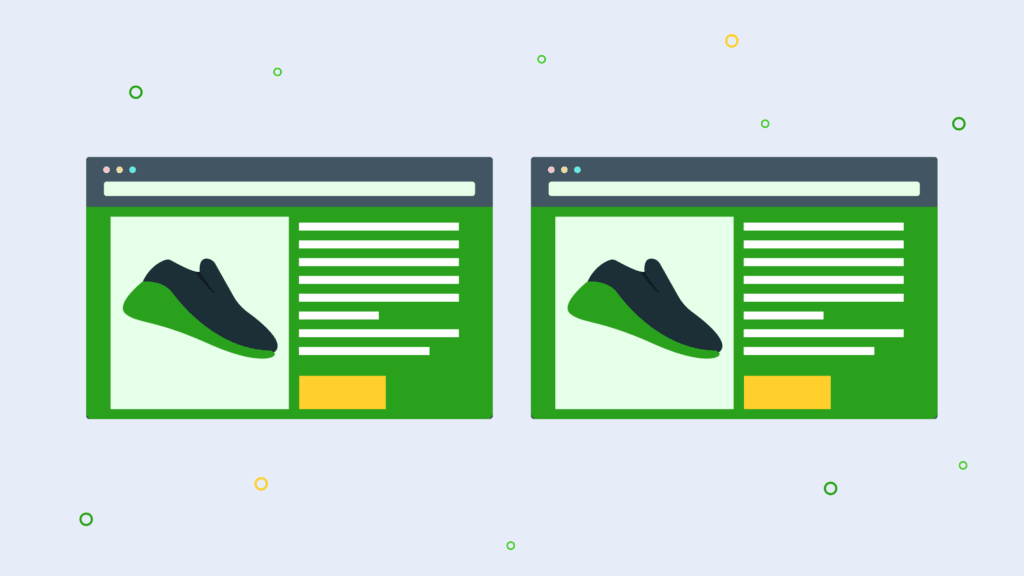
You manage an e-commerce store with 5,000 products. Your supplier provides descriptions that you've copied to your site. So have your 50 competitors. Google now sees thousands of identical product descriptions across the web and none of you are ranking well.
Or perhaps you sell products in multiple colors and sizes. You've created 20 variants of the same t-shirt, each with identical descriptions except for the color name. Google flags these as duplicate content, and your product pages compete against each other instead of ranking.
Duplicate product descriptions are one of e-commerce SEO's most pervasive challenges. They're easy to create (just copy manufacturer content), scale quickly with large inventories, and severely damage your search visibility. But fixing them seems overwhelming when facing thousands of products requiring unique content.
This comprehensive guide reveals exactly how to identify duplicate content at scale, strategic approaches for creating unique descriptions efficiently, automation and AI tools that actually work, and sustainable processes preventing future duplication.
Understanding Duplicate Product Descriptions and Their Impact
Before solving the problem, understand what you're dealing with:
What Constitutes Duplicate Product Descriptions?
Duplicate content occurs when identical or substantially similar text appears on multiple URLs, either on your site or across the web.
Types of duplicate product content:
Internal duplication:
- Identical descriptions across product variants (color, size)
- Same content on category pages and product pages
- Multiple URLs showing the same product (www vs. non-www, HTTP vs. HTTPS)
- Pagination creating duplicate content
- Filter URLs generating duplicate pages
External duplication:
- Manufacturer descriptions copied across hundreds of retailer sites
- Dropshipping sites all using supplier content
- Product data feeds creating identical descriptions
- Affiliate sites duplicating merchant content
- Scraped content from competitors
Near-duplicate content:
- Descriptions with minor variations (changing one word)
- Template-based descriptions with only product name changed
- Minimal unique content added to manufacturer text
- Color/size variations with only attribute changed
According to Google's duplicate content guidelines, duplicate content itself doesn't trigger penalties, but it creates serious ranking and indexation issues.
How Duplicate Descriptions Hurt SEO
Ranking suppression:
When Google finds multiple pages with identical content:
- It chooses one "canonical" version to rank
- Other versions get filtered from results
- The canonical might be a competitor, not you
- Your product pages don't rank for target keywords
Keyword cannibalization:
Multiple product pages with same descriptions compete for the same keywords:
- Authority dilutes across pages
- None rank as strongly as a single page could
- Confuses Google about which page to rank
- Wastes link equity across duplicates
Crawl budget waste:
On large e-commerce sites:
- Google spends time crawling duplicate content
- Important unique pages get crawled less frequently
- New products take longer to get discovered
- Site efficiency decreases
User experience degradation:
Duplicate content signals low quality:
- Reduces trust when customers see identical descriptions across products
- Makes products harder to differentiate
- Provides no value-add over competitors
- Looks lazy or automated
Indexation issues:
Severe duplication can cause:
- Pages not getting indexed at all
- Mass deindexation of product pages
- Google classifying site as low-quality
- Reduced overall site authority
Learn more about duplicate content issues and their technical implications.
Identifying Duplicate Content at Scale
Before fixing, systematically identify all duplicates:
Internal Duplicate Detection
Method 1: Site crawl analysis
Use SEO crawling tools:
Screaming Frog:
- Crawl your site
- Navigate to Content → Duplicates
- Review "Duplicate Content" report
- Export duplicate page groups
- Identify patterns (variants, categories, etc.)
Sitebulb, Oncrawl, or SEMrush:
- Run full site audit
- Check duplicate content reports
- Analyze similarity percentages
- Identify affected sections
Method 2: Google Search Console
Check for duplication signals:
- Coverage report showing duplicate URLs
- "Duplicate without user-selected canonical"
- "Duplicate, Google chose different canonical"
- Pages excluded due to duplication
Method 3: Manual spot checks
Use plagiarism detection:
Copyscape:
- Enter product page URLs
- Find identical content online
- Identify external duplicates
Siteliner:
- Scan for internal duplicate content
- Shows duplicate percentage
- Identifies matching pages
Method 4: Database query analysis
For e-commerce platforms, query directly:
-- Find products sharing descriptions
SELECT description, COUNT(*) as count
FROM products
GROUP BY description
HAVING count > 1
ORDER BY count DESC;
This reveals which descriptions are used most frequently.
External Duplicate Assessment
Google search operator:
"exact product description text" -site:yourdomain.com
Shows how many other sites use identical content.
Copyscape batch checking:
- Upload product URLs in bulk
- Identify external duplication
- Prioritize uniqueness for most important products
Competitive analysis: Check if competitors face same issue:
- Are they using manufacturer content?
- Do they have unique descriptions?
- Who ranks better unique or duplicate content?
Prioritization Framework
Not all duplicates need fixing simultaneously. Prioritize:
High priority (fix first):
- Best-selling products with duplicate content
- Products with highest traffic potential
- Items in competitive niches
- Products where you have unique expertise
- High-margin items worth the investment
Medium priority:
- Steady sellers with moderate traffic
- Category-representative products
- Items with some existing traffic
- Products with seasonal relevance
Low priority (fix eventually):
- Low-traffic, low-revenue products
- Discontinued items still in stock
- Products being phased out
- Ultra-niche items with minimal competition
Create a spreadsheet scoring products by:
- Current revenue
- Traffic potential (search volume)
- Competition level
- Margin/profitability
- Brand importance
Our e-commerce SEO services include comprehensive duplicate content audits and prioritization.
Strategic Approaches to Creating Unique Content at Scale
Different strategies work for different business scenarios:
Approach 1: The Enhancement Method
Rather than replacing manufacturer content entirely, enhance it significantly.
Implementation:
Keep manufacturer content (30-40% of final description):
- Technical specifications
- Objective product features
- Warranty information
- Compliance certifications
Add substantial unique content (60-70%):
Opening unique paragraph (100-150 words):
- Who this product is perfect for
- Key benefits and value proposition
- What problem it solves
- Why choose this over alternatives
Expanded features section:
- Benefits explanation for each feature
- Real-world usage scenarios
- How features work together
- Unique advantages
Usage and care instructions:
- How to use properly
- Maintenance tips
- Best practices
- Common mistakes to avoid
Comparative information:
- How it compares to similar products
- What makes it unique
- When to choose this vs. alternatives
Social proof integration:
- Customer review highlights
- Testimonial quotes
- Usage examples from customers
- Rating and review summary
Example structure:
[Unique Opening - 100 words]
Discover the perfect solution for [customer need]. This [product] stands out
with its [unique features] that deliver [specific benefits]. Ideal for
[target audience], it solves [problem] while offering [advantage].
Key Benefits:
- [Benefit 1 with detailed explanation]
- [Benefit 2 with real-world application]
- [Benefit 3 with unique value]
[Manufacturer Specifications]
[Can keep original specs here]
How to Use:
[Unique usage instructions - 100 words]
Care Instructions:
[Unique care information - 50 words]
What Customers Say:
[Review highlights - 50 words]
Why Choose This Product:
[Unique selling points - 100 words]
[Specifications table]
Advantages:
- Faster than complete rewrites
- Maintains accuracy of technical specs
- Focuses effort on value-add content
- Scalable with templates
Time estimate: 20-30 minutes per product
Approach 2: Complete Rewrite from Scratch
For high-priority products, invest in completely original descriptions.
Process:
Research phase:
- Study the product hands-on if possible
- Read customer reviews for insights
- Research competing products
- Identify unique selling propositions
- Understand target customer pain points
Writing phase:
- Start with customer perspective
- Focus on benefits before features
- Tell the product's story
- Include use cases and scenarios
- Add personal recommendations
Structure for rewrites:
[Compelling Headline-Style Opening]
[Engaging First Paragraph]
Hook the customer with the main benefit and emotional appeal
[Story or Scenario]
Paint a picture of using the product
[Detailed Benefits]
Deep dive into what this product delivers
[Features with Context]
Technical specs explained with benefits
[Comparison and Positioning]
Where this fits in the market
[Trust Elements]
Warranty, guarantees, certifications
[Call to Action]
Encouraging next step
Advantages:
- Maximum uniqueness
- Highest quality content
- Best conversion potential
- Strongest differentiation
Disadvantages:
- Time-intensive (1-2 hours per product)
- Expensive at scale
- Requires skilled writers
- Not feasible for thousands of products
Best for:
- Top 20% of products by revenue
- Signature or flagship items
- High-competition niches
- Premium products with good margins
Approach 3: Modular Template System
Create content modules that combine into unique descriptions.
Building modules:
Create 5-10 variations for each section:
Opening paragraphs (10 variations):
- Problem-solution focused
- Benefit-driven
- Feature-focused
- Lifestyle-oriented
- Professional/serious tone
- Casual/friendly tone
- Question-based
- Story-based
- Comparison-based
- Innovation-focused
Feature explanations (15-20 variations):
- Different ways to describe same feature
- Various benefit angles
- Multiple use cases
- Different user perspectives
Usage scenarios (10 variations):
- Different contexts
- Various customer types
- Multiple applications
- Diverse situations
Assembly system:
Product 1: Opening A + Features 1,4,7 + Usage B + Closing C
Product 2: Opening D + Features 2,5,8 + Usage E + Closing A
Product 3: Opening F + Features 3,6,9 + Usage C + Closing D
Implementation:
# Simple modular system
openings = [variation1, variation2, ...]
features = [variation1, variation2, ...]
scenarios = [variation1, variation2, ...]
closings = [variation1, variation2, ...]
def generate_description(product, seed):
# Use product ID as seed for deterministic selection
random.seed(seed)
description = random.choice(openings)
description += " " + random.choice(features)
description += " " + random.choice(scenarios)
description += " " + random.choice(closings)
# Replace placeholders with product specifics
description = description.replace('[PRODUCT_NAME]', product.name)
description = description.replace('[MATERIAL]', product.material)
return description
Advantages:
- Scalable to thousands of products
- Maintains quality and readability
- Creates genuinely unique combinations
- Efficient content creation
- Consistent brand voice
Disadvantages:
- Initial setup time intensive
- Still requires product-specific customization
- Can feel formulaic if not done well
- Needs careful module writing
Learn about content writing strategies for effective implementation.
Approach 4: AI-Assisted Content Generation
Leverage AI tools responsibly for scale.
Effective AI workflow:
Step 1: Prepare quality input
- Product specifications
- Key features and benefits
- Target audience information
- Brand voice guidelines
- Competitor research
Step 2: Generate with AI Use tools like:
- ChatGPT or Claude for custom prompts
- Jasper or Copy.ai for commerce content
- Writesonic or Rytr for product descriptions
- Custom GPT-3 implementations
Prompt template:
Write a unique, engaging product description for [PRODUCT_NAME].
Product Details:
- Category: [CATEGORY]
- Key Features: [FEATURE_LIST]
- Material: [MATERIAL]
- Benefits: [BENEFIT_LIST]
- Target Customer: [AUDIENCE]
Requirements:
- 300-400 words
- Conversational yet professional tone
- Focus on benefits before features
- Include usage scenarios
- SEO-friendly but natural
- Avoid generic phrases like "perfect for" or "amazing quality"
Brand Voice: [YOUR_BRAND_VOICE_DESCRIPTION]
Step 3: Human editing (critical)
- Review for accuracy
- Fact-check all claims
- Add product-specific details
- Adjust tone and voice
- Ensure brand consistency
- Remove generic AI phrases
Step 4: Quality control
- Run through plagiarism checker
- Verify uniqueness score >85%
- Confirm factual accuracy
- Test readability
- Validate against brand guidelines
Advantages:
- Extremely scalable
- Cost-effective at volume
- Fast turnaround
- Consistent baseline quality
Disadvantages:
- Requires careful prompting
- Needs human oversight
- Can feel generic without editing
- May hallucinate incorrect details
- Ethical considerations about AI content
Best practices:
- Never publish AI content unedited
- Always fact-check generated content
- Add human touches and personality
- Use as starting point, not final product
- Disclose AI use if required by regulations
Approach 5: Crowdsourced Content
Leverage customers and community for unique descriptions.
Customer review mining:
- Extract insights from reviews
- Identify common praise points
- Note frequently mentioned benefits
- Use customer language in descriptions
User-generated content integration:
- Customer photos and videos
- "How I use it" submissions
- Customer tips and tricks
- Real-world application stories
Implementation example:
"Real customers love this product for [insight from reviews].
As one verified buyer said, '[actual review quote]'.
See what [number] customers are saying in our reviews below."
Expert contributions:
- Industry expert quotes
- Professional endorsements
- Expert usage recommendations
- Authority figure testimonials
Staff input: If you have knowledgeable staff:
- Have team members try products
- Collect their unique insights
- Document their recommendations
- Share authentic experiences
Technical Implementation and Automation
Scale your solution with automation:
Batch Content Management
Spreadsheet system:
Create master spreadsheet:
| SKU | Product Name | Current Desc | Unique Desc | Status | Priority | Assigned To | Due Date |
| P001 | Product 1 | Duplicate | [New] | Complete | High | Writer A | 2026-03-01 |
Workflow:
- Export products from e-commerce platform
- Identify duplicates
- Assign priorities
- Distribute to writers/tools
- Track completion
- Import back to platform
Platform-specific bulk editing:
Shopify:
- Use CSV import/export
- Apps like Bulk Product Edit
- API integrations for automation
WooCommerce:
- WP All Import plugin
- Database direct updates
- Custom scripts via wp-cli
Magento:
- Data Import/Export tool
- Bulk attribute update
- API-based automation
BigCommerce:
- CSV import functionality
- Bulk editing tools
- API integrations
Content Management System Integration
Headless CMS approach:
Store product content separately:
- Contentful, Sanity, or Strapi
- Version control for descriptions
- Easy bulk updates
- Multi-language support
- Approval workflows
Benefits:
- Centralized content management
- Easy collaboration
- Change tracking
- Rollback capability
- Platform independence
Quality Control Automation
Plagiarism checking at scale:
# Automated duplication checking
import requests
def check_uniqueness(description, api_key):
response = requests.post(
'https://api.copyscape.com/check',
data={
'text': description,
'key': api_key
}
)
return response.json()['percentUnique']
# Check all descriptions
for product in products:
uniqueness = check_uniqueness(product.description)
if uniqueness < 85:
flag_for_rewrite(product)
Readability scoring:
import textstat
def check_readability(text):
flesch_score = textstat.flesch_reading_ease(text)
# Target: 60-70 (easily understood by 13-15 year olds)
return flesch_score
# Ensure descriptions are readable
for product in products:
score = check_readability(product.description)
if score < 60:
flag_for_simplification(product)
Length validation:
def validate_length(description, min_words=250, max_words=500):
word_count = len(description.split())
if word_count < min_words:
return "too_short"
elif word_count > max_words:
return "too_long"
else:
return "valid"
Our programmatic SEO services include automated content management solutions.
Handling Specific Duplicate Scenarios
Different duplicate situations need different solutions:
Product Variants (Color, Size)
Problem: Same t-shirt in 8 colors with identical descriptions.
Solutions:
Option 1: Canonical tags Point all variants to primary color:
<!-- On red-tshirt page -->
<link rel="canonical" href="https://example.com/products/tshirt-blue">
<!-- On blue-tshirt page (primary) -->
<link rel="canonical" href="https://example.com/products/tshirt-blue">
Option 2: Dynamic descriptions Template highlighting variant differences:
This [PRODUCT_NAME] in [COLOR] offers [COLOR_SPECIFIC_BENEFIT].
Perfect for [COLOR_USE_CASE]. The [COLOR] option particularly suits
[SCENARIO].
[Shared product information]
Color Details:
[Specific information about this color variant]
Option 3: Variant parameter approach
- Main product page with full description
- Variants load via parameters: /product?color=red
- No duplicate pages created
Manufacturer Content Duplication
Problem: Using supplier descriptions used by 100 other retailers.
Solutions:
Minimum 60% unique content:
- Keep specs but rewrite everything else
- Add your expert perspective
- Include customer insights
- Share usage tips from your experience
Unique introductions and conclusions:
- Wrap manufacturer content with original writing
- Add context specific to your customers
- Share why you chose to carry this product
Supplement with rich media:
- Your own product photos
- Demonstration videos
- Comparison charts
- Size guides specific to your sizing
Category and Product Overlap
Problem: Category page and product pages share content.
Solutions:
Differentiate purpose:
- Category: Overview, comparison, buying guide
- Product: Specific details, specifications, purchase info
Unique angles:
- Category: "How to choose" content
- Product: "How to use" content
Cross-linking strategy:
- Category links to products with unique summaries
- Products link back to category with different text
Dropshipping Duplicate Content
Problem: Multiple dropshippers using identical supplier content.
Solutions:
Significant differentiation:
- Add extensive unique value
- Position products uniquely
- Create buying guides
- Offer unique bundles
- Provide exceptional support info
Alternative: Focus on other factors: If content creation isn't feasible:
- Excel in other areas (service, shipping, price)
- Build strong backlink profile
- Focus on conversion optimization
- Invest in brand building
- Target long-tail, less competitive keywords
Maintaining Content Uniqueness Long-Term
Prevent duplicate content from recurring:
New Product Onboarding Process
Standard Operating Procedure:
- Never copy manufacturer description directly
- Minimum content requirements checklist:
- [ ] 300+ words unique content
- [ ] Benefits-focused opening
- [ ] Feature explanations
- [ ] Usage scenarios
- [ ] Care instructions
- [ ] 85%+ uniqueness score
- Quality review before publishing
- Plagiarism check confirmation
- SEO element completion (title, meta, schema)
Content Creation Guidelines
Documented standards:
Create internal style guide:
- Minimum word count (e.g., 300 words)
- Required sections
- Tone and voice guidelines
- Prohibited phrases (overused terms)
- SEO requirements
- Quality thresholds
Writer training:
- Educate team on duplicate content issues
- Provide good and bad examples
- Share templates and frameworks
- Regular quality reviews
- Performance feedback
Regular Auditing
Quarterly duplicate checks:
- Crawl site for new duplicates
- Check top products for staleness
- Review competitor content
- Update product descriptions
- Refresh old content
Automated monitoring:
- Set up alerts for new duplicates
- Track uniqueness scores over time
- Monitor Search Console warnings
- Review crawl budget usage
Documentation and Version Control
Track changes:
- Document who wrote each description
- Version history for descriptions
- A/B test tracking
- Performance data per version
Share what works:
- Identify high-performing descriptions
- Analyze successful patterns
- Create new templates from winners
- Continuous improvement process
Review our e-commerce SEO tips for ongoing optimization.
Measuring Success and ROI
Track the impact of your efforts:
Key Metrics
Uniqueness metrics:
- Average uniqueness score across products
- Percentage of products with unique content
- Reduction in duplicate content warnings
- External duplication decrease
SEO performance:
- Indexed product pages (increase)
- Organic traffic to product pages
- Average product page rankings
- Long-tail keyword rankings
Business impact:
- Conversion rate on rewritten products
- Revenue from optimized products
- Time on page improvements
- Bounce rate reduction
Efficiency metrics:
- Cost per unique description
- Time per description
- Descriptions completed per week
- ROI of content investment
A/B Testing Content
Test methodology:
- Select 100 similar products
- Split into two groups (50 each)
- Rewrite descriptions for test group
- Keep duplicates for control
- Track performance for 60-90 days
- Compare results
Metrics to compare:
- Organic traffic
- Conversion rate
- Revenue per product
- Search rankings
- Click-through rate from search
Expected improvements:
- 20-40% increase in organic traffic
- 10-25% better conversion rates
- Improved rankings (varies widely)
- Better crawl budget utilization
Frequently Asked Questions About Duplicate Product Descriptions
How unique does product content need to be to avoid SEO issues?
Aim for at least 85% unique content compared to other pages. This means if you keep manufacturer specifications (15%), you need to add substantial unique value (85%) through benefits explanation, usage scenarios, care instructions, and original insights. Simply changing a few words isn't enough Google recognizes near-duplicates. Focus on genuinely different, valuable content that serves customers better than manufacturer descriptions.
Can I use the same description for product variants like different colors?
While technically possible with proper canonicalization, it's better to create unique descriptions highlighting variant-specific benefits. If you must use similar content, point variants to one canonical version and add dynamic unique elements mentioning the specific variant. Alternatively, use a single product page with variant selectors rather than separate URLs for each color/size combination to avoid duplication entirely.
Will AI-generated product descriptions hurt my SEO?
AI-generated content itself isn't inherently bad for SEO if it's unique, valuable, and accurate. However, publishing unedited AI content that's generic, factually incorrect, or similar to content on other sites can hurt rankings. Always edit AI-generated descriptions, fact-check claims, add product-specific details, and ensure genuine uniqueness. Use AI as a starting point requiring human refinement, not as a complete solution.
How long does it take to see SEO improvements after fixing duplicate content?
You'll typically see initial improvements within 2-4 weeks as Google recrawls updated pages. Significant ranking improvements usually take 2-3 months as Google reassesses your site's content quality. Full benefits may take 6+ months, especially for competitive keywords. Track progress in Google Search Console's Coverage report and monitor organic traffic trends. Improvements compound over time as you fix more products and build overall site authority.
Why Choose Sadekur Rahman for Product Description Optimization
Fixing duplicate content at scale requires specialized expertise, efficient processes, and quality content creation capabilities.
Our Product Content Expertise
As an experienced SEO specialist, I provide comprehensive duplicate content solutions:
- Complete duplicate content audits
- Strategic prioritization frameworks
- Scalable content creation systems
- AI-assisted content workflows with human oversight
- Quality control and plagiarism checking
- Template development for efficiency
- Writer team management
- Ongoing content maintenance
Proven E-Commerce Success
Our case studies demonstrate successful large-scale content projects:
- Rewrote 5,000+ product descriptions
- Reduced duplicate content by 95%
- Increased organic traffic 150%+
- Improved product page rankings significantly
- Sustainable content processes implemented
- ROI-positive content investments
Comprehensive E-Commerce Services
Our complete e-commerce SEO services include:
- Product page optimization
- Content strategy and creation
- Technical SEO for e-commerce
- Site architecture optimization
- Conversion rate optimization
- Performance tracking and reporting
Scalable Content Solutions
We provide services for any catalog size:
For small catalogs (under 500 products):
- Custom written descriptions
- High-quality unique content
- Detailed product research
- Brand voice development
For medium catalogs (500-5,000 products):
- Modular template systems
- Priority-based rewriting
- AI-assisted with human editing
- Batch processing workflows
For large catalogs (5,000+ products):
- Automated content generation
- Programmatic optimization
- Template-based scaling
- Tiered quality approaches
- Ongoing content production
Explore our plans and pricing for content services.
Transform Your Product Content
Stop letting duplicate content hurt your rankings and revenue. Book a meeting to discuss your duplicate content challenges and discover scalable solutions for your catalog size.
Need a duplicate content audit? Contact us for a comprehensive analysis of your product descriptions and optimization opportunities.
Conclusion
Duplicate product descriptions are perhaps e-commerce SEO's most common yet solvable challenge. Whether you're facing internal duplication across variants, external duplication from manufacturer content, or both, strategic approaches can transform your product content at scale.
The key is balancing quality with efficiency. Complete custom rewrites for 10,000 products aren't feasible for most businesses. But neither is ignoring the problem and accepting poor rankings. The solution lies in strategic prioritization (fix high-value products first), scalable systems (templates, modules, AI assistance), quality standards (minimum uniqueness thresholds), and efficient workflows (automation, batch processing).
Start by auditing your current situation identify which products have duplicate content, assess how severe the duplication is, prioritize based on revenue and traffic potential, and choose appropriate solutions for different product tiers. Implement systematically, beginning with your highest-priority products and working through your catalog in batches.
Remember that unique doesn't mean lengthy it means genuinely different and valuable. A well-written 300-word unique description outperforms a 1,000-word manufacturer description copied by 50 competitors. Focus on adding value, sharing expertise, helping customers make decisions, and differentiating your products.
The businesses that succeed in e-commerce SEO are those that invest in content as a strategic advantage, not just a checkbox to complete. Your product descriptions are often the last thing customers read before buying make them count. Fix your duplicate content, establish sustainable processes, and watch your organic visibility and conversions improve.
Your catalog deserves unique, compelling descriptions that convert browsers into buyers. Start transforming your product content today.
Related Articles:

Written by Sadekur Rahman
SEO & Website Strategy Specialist at Pixelvega and SEO Executive at Daily Amar Desh. 6+ years helping brands grow with data-driven SEO.