Why Did My Local Rankings Drop After Moving Locations? Recovery Guide
Local rankings tanked after moving? Learn why business relocation hurts SEO and follow our proven recovery plan to rebuild your local visibility.

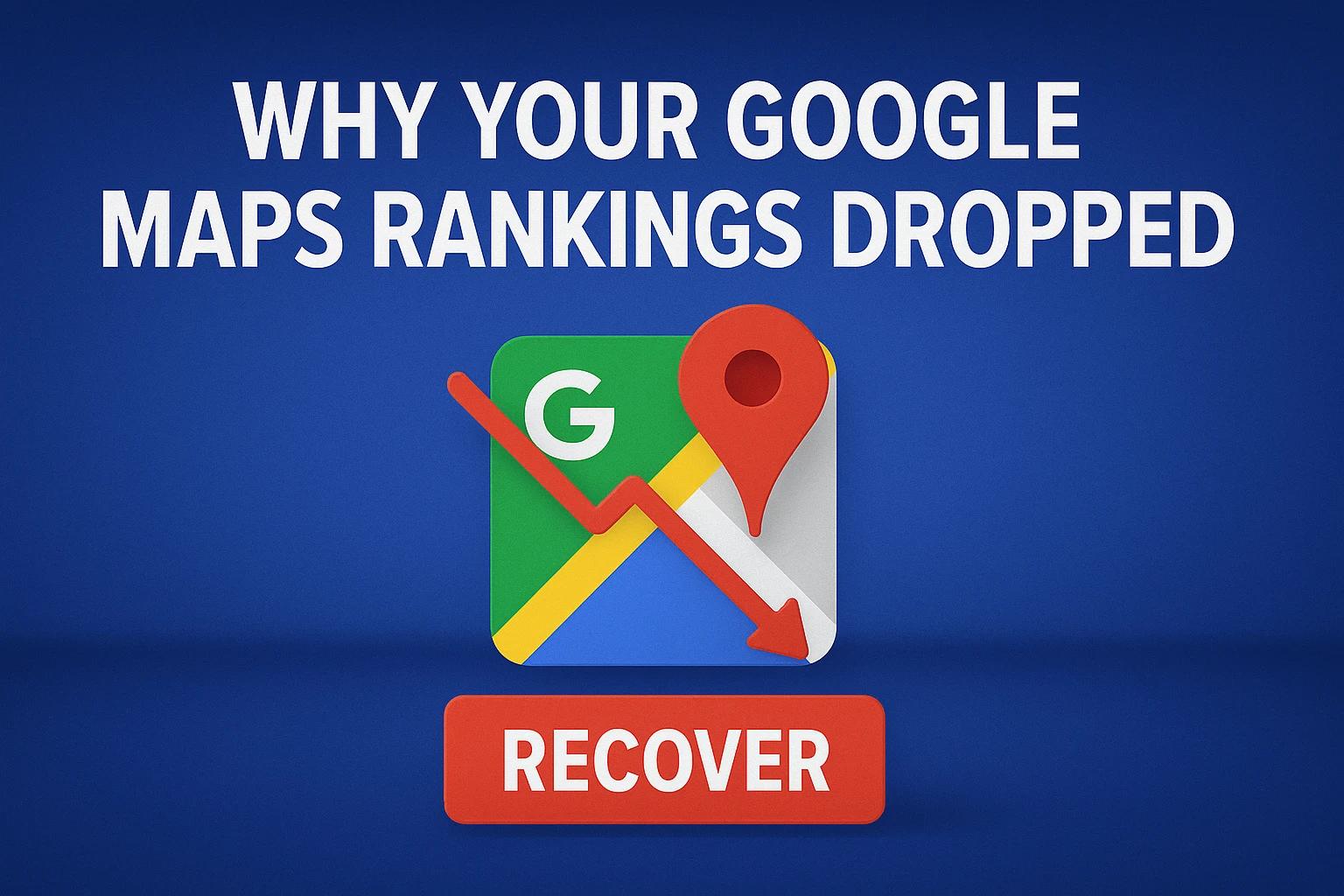
You've successfully moved your business to a better location. Bigger space, more parking, better foot traffic. Everything seems perfect until you check your local search rankings.
Your business has disappeared from Google's local pack. The phone stops ringing. Customers can't find you. Website traffic from local searches has plummeted. Your carefully built local SEO presence seems to have vanished overnight.
Moving locations is one of the most disruptive events for local SEO. Years of accumulated local authority, reviews, citations, and rankings can temporarily collapse when you change addresses. The disruption is real, expected, and fortunately recoverable.
This comprehensive guide explains exactly why business relocation tanks local rankings and provides a step-by-step recovery plan to rebuild your local visibility faster than it took to establish it initially.
Why Business Relocation Destroys Local Rankings
Understanding why moves hurt rankings helps you approach recovery strategically:
Google Needs to Re-Verify Your Location
Your Google Business Profile (GBP) verification is tied to your specific physical address. When you move, Google must re-verify that your business legitimately operates at the new location.
The verification process:
During re-verification, your profile may be temporarily unpublished or suspended. This means:
- Your business doesn't appear in local search results
- Your listing disappears from Google Maps
- Customers can't find your profile
- All your accumulated local ranking signals pause
Even after successful re-verification, Google needs time to re-establish trust in your new location. You're essentially starting with a blank slate in the new neighborhood while your old location signals fade.
Your Local Citation Foundation Collapses
Local citations mentions of your business name, address, and phone number across the web are fundamental local ranking factors. Moving creates massive citation inconsistencies:
Old citations still dominate: You might have hundreds of citations listing your old address across:
- Business directories (Yelp, Yellow Pages, BBB)
- Industry-specific directories
- Local chambers and associations
- Review platforms
- Social media profiles
- News articles and press releases
- Partner websites
New citations haven't accumulated: Your new address has zero citation presence initially. This creates a dangerous situation where Google sees conflicting address information everywhere and can't determine which is correct.
According to research by Moz on local search ranking factors, citation consistency and accuracy significantly impact local rankings. Moving obliterates this consistency overnight.
Your Neighborhood and Proximity Signals Reset
Google heavily weighs proximity in local search results how close your business is to the searcher. Moving changes this fundamental calculation:
New competitive landscape: Your new location has different competitors. Businesses that dominated in your old neighborhood may not exist in your new area, but you face entirely new competitors who've established local presence.
Different search density areas: Some neighborhoods generate more local searches than others. Moving from a high-search-volume area to lower, or vice versa, affects opportunity.
Proximity to landmark changes: If customers previously searched for services "near [landmark]" and you were close to that landmark, moving farther away eliminates that advantage.
Service area overlap: For service area businesses, moving might change which cities fall within your practical service radius, requiring service area reconfiguration.
Review Velocity and Recency Decline
Reviews are critical local ranking factors. Moving disrupts your review generation:
Temporary business disruption: During the move, you're likely serving fewer customers, generating fewer review opportunities.
Customer confusion: Some customers may not realize you've moved and leave negative reviews about your "closure" or inability to find you.
Old location reviews become less relevant: Google may perceive reviews mentioning your old location as less current and relevant to your new location.
Review platforms list wrong address: Until updated, review platforms show your old address, creating customer frustration and potentially negative reviews.
Local Backlink Relevance Decreases
Backlinks from local sources strengthen your geographic association. Moving can weaken this:
Old neighborhood association links: Links from your old neighborhood chamber of commerce, local business associations, or nearby businesses become geographically irrelevant.
Partner and vendor links: If you moved far enough, links from location-specific partners may no longer signal relevant local authority.
Local news and media coverage: Press coverage from your old area doesn't help with new location rankings.
Event sponsorships and community ties: Community involvement links from your previous location don't transfer geographic authority to your new area.
You need to rebuild local backlinks in your new location to re-establish geographic relevance. Our backlink building services include strategic local link acquisition.
Website Content Becomes Outdated
Your website likely contains hundreds of references to your old location:
- Address in footer and header
- Location-specific service pages
- Blog posts mentioning your old neighborhood
- Case studies and testimonials referencing old location
- Schema markup with old address
- About page with old location history
- Contact page with old address and directions
Until systematically updated, this content sends conflicting location signals to Google.
Technical SEO Issues Emerge
Moving can introduce technical problems:
Broken Google Maps embeds: Maps showing your old location confuse customers and search engines.
Outdated schema markup: LocalBusiness structured data with old address explicitly tells Google incorrect information.
NAP inconsistencies: Name, Address, Phone number variations across different website sections create confusion.
City-specific URL slugs: If you created city-specific pages for your old location, these may become irrelevant or require redirection.
Review our technical SEO checklist to ensure your site's technical foundation supports your new location.
Immediate Actions: First 24-48 Hours After Moving
Time is critical when relocating. These immediate actions minimize ranking disruption:
Update Google Business Profile Immediately
Your GBP is your most important local asset update it the moment you have access to your new location:
Change your address:
- Log into your Google Business Profile
- Click "Edit profile" and update your address
- Enter the exact USPS-formatted address
- Include suite or unit numbers if applicable
- Save changes immediately
Expect re-verification:
- Google will likely require address verification
- Request postcard verification if not automatically triggered
- Have someone available at new location to receive mail
- Consider video verification if available and faster
- Complete verification within 30 days
Update service areas (if applicable):
- Adjust service area boundaries based on new location
- Remove areas now outside your practical service radius
- Add newly accessible areas
- Ensure service area accuracy matches your actual coverage
Update business hours temporarily:
- Consider marking as "temporarily closed" during actual move days
- Update to new hours once open at new location
- Note any changes in hours based on new location logistics
Upload new location photos:
- Exterior photos showing new building and signage
- Interior photos of new space
- Photos showing street view and landmarks near new location
- Team photos at new location
- Add photos immediately to signal active new location
Update Your Website Completely
Every page mentioning location needs immediate updates:
Critical updates:
- Footer address and contact information
- Header/navigation contact details
- Contact page address and embedded map
- About page location information
- Homepage location mentions
- Service area pages
Schema markup updates: Update LocalBusiness structured data immediately:
{
"@context": "https://schema.org",
"@type": "LocalBusiness",
"name": "Your Business Name",
"address": {
"@type": "PostalAddress",
"streetAddress": "NEW ADDRESS",
"addressLocality": "NEW CITY",
"addressRegion": "ST",
"postalCode": "NEW ZIP",
"addressCountry": "US"
},
"telephone": "+1-NEW-NUMBER",
"geo": {
"@type": "GeoCoordinates",
"latitude": "NEW LATITUDE",
"longitude": "NEW LONGITUDE"
}
}
Proper schema markup implementation explicitly tells Google your new location.
Google Maps embeds:
- Replace all embedded maps with new location
- Update directions and "Get Directions" links
- Add new location to mobile click-to-navigate features
Meta descriptions and title tags: If your old city appears in titles or descriptions, update strategically:
- Homepage title: "Business Name - Service in NEW CITY, State"
- Location pages may need complete rewrites
- Update city references in meta descriptions
Notify Major Platforms Immediately
Don't wait to update these critical platforms:
Social media:
- Facebook Business Page address and location
- LinkedIn Company Page location
- Instagram business profile location
- Twitter profile location
- YouTube channel about section
Review platforms:
- Yelp business location
- Better Business Bureau listing
- Industry-specific review sites
- Local review platforms
Apple Maps: Update your Apple Maps Connect listing with new address.
Bing Places: Update Microsoft/Bing Places for Business with new location.
Major directories: Priority updates for high-authority sites:
- Yellow Pages
- Citysearch
- Superpages
- Foursquare
- MapQuest
Communicate the Move to Customers
Customer communication prevents negative reviews and confusion:
Email announcement: Send to your email list:
- New address with clear directions
- Move date and any service interruption
- New phone number if changed
- Excitement about new location benefits
- Request to update their records
Social media posts: Multiple posts across platforms:
- Announcement post with new address
- Photos of new location
- Behind-the-scenes move content
- Grand opening or re-opening details
- Directions and parking information
Website banner: Add prominent notice:
- "We've Moved! Visit us at [NEW ADDRESS]"
- Link to updated contact page
- Mention any changes in hours or services
Old location signage: If you still have access:
- Post notice with new address
- Include map or directions
- List new phone number
- Consider how long to maintain forwarding
Week 1-2: Foundation Rebuilding
After immediate updates, focus on establishing your new location foundation:
Begin Systematic Citation Updates
Citation updates take time start immediately and work systematically:
Audit existing citations: Use tools to find all existing citations:
- Moz Local citation finder
- BrightLocal citation tracker
- Whitespark citation finder
- Manual Google searches for your business name
Create a spreadsheet tracking:
- Platform name
- Current listing URL
- Update status (pending, updated, removed)
- Contact information if manual update needed
- Priority level (high/medium/low)
Prioritize citation updates:
Tier 1 (Update first - Days 1-3):
- Google Business Profile
- Facebook, LinkedIn, Instagram
- Yelp, Better Business Bureau
- Apple Maps, Bing Places
- Major directories (Yellow Pages, Superpages)
Tier 2 (Update next - Week 1):
- Industry-specific directories
- Local chamber of commerce
- Professional association directories
- Review platforms
- Local news site business listings
Tier 3 (Complete within 2-4 weeks):
- Smaller local directories
- Niche directories
- Low-traffic platforms
- Blog mentions and partnerships
Handle stubborn citations: Some platforms make updates difficult:
- Submit claim requests for unclaimed listings
- Contact support for platforms without self-serve editing
- Document attempts to update
- Consider disavowing citations you can't update or remove
Build New Location Citations
While updating old citations, build new ones in your new area:
Local-specific platforms:
- New neighborhood business associations
- New city chamber of commerce
- Local business directories specific to new area
- Community websites and forums
- New city visitor guides and tourism sites
Location-based opportunities:
- Neighborhood-specific directories
- New city's official business directory
- Local online newspapers business listings
- Shopping district or mall directories
- Local event and venue listing sites
Our local SEO services include comprehensive citation building for new locations.
Create Location-Specific Content
Content establishes your presence in the new area:
Announcement blog post: Publish a detailed post about your move:
- Why you moved to new location
- Benefits of new space
- What customers can expect
- Directions and parking information
- Photos of new location
- New operating hours or changes
New neighborhood guide: Create content showing local expertise:
- Guide to your new neighborhood
- Nearby businesses and partnerships
- Local landmarks and directions
- Area history and community involvement
- Parking and transit options
Updated service area content: Revise or create pages for:
- New cities now within service area
- New neighborhoods you serve
- Areas with improved access from new location
- Updated service area maps
Local event coverage: Start attending and covering local events:
- Join new neighborhood business meetings
- Attend local community events
- Cover relevant local news
- Participate in area discussions
Learn more about effective content marketing strategies for local businesses.
Request Updated Reviews
Encourage customers to leave fresh reviews at new location:
Review request strategy:
- Email recent customers requesting reviews
- Include new location in review requests
- Mention the new location in review responses
- Ask customers to note the new location in their reviews
Review response updates: Respond to all reviews mentioning the move:
- Thank customers for finding new location
- Confirm you've moved and provide new address
- Encourage future visits to new location
- Address any confusion about the move
Manage old location reviews:
- Respond to reviews confused about old location
- Politely explain move in responses
- Direct them to new location
- Maintain professionalism even with frustrated customers
Weeks 3-8: Rebuilding Authority
Once the foundation is set, focus on rebuilding local authority:
Build Local Backlinks in New Area
Links from local sources re-establish geographic relevance:
Join local organizations:
- Chamber of commerce in new city
- Business improvement districts
- Professional associations with local chapters
- Industry groups in new area
- Neighborhood business associations
Develop local partnerships:
- Cross-promote with complementary businesses
- Create referral partnerships
- Collaborate on local events
- Co-sponsor community initiatives
- Partner with local suppliers
Earn local media coverage:
- Pitch new location opening story to local news
- Offer expert commentary on local issues
- Highlight community involvement
- Share local employment announcements
- Participate in local business features
Sponsor local events:
- Community festivals and events
- Local sports teams
- Charity fundraisers
- School or nonprofit programs
- Business networking events
Participate in local digital spaces:
- Join local business Facebook groups
- Participate in neighborhood forums
- Engage on Nextdoor in new area
- Comment on local news and blogs
- Contribute to local online communities
Optimize for New Competitive Landscape
Your new location has different competitors adjust strategy accordingly:
Analyze new competitors: Use tools to identify who ranks in your new area:
- Search your keywords with new location
- Analyze local pack competitors
- Review their Google Business Profiles
- Study their citation profiles
- Examine their local content strategies
Identify competitive advantages:
- What do you offer that local competitors don't?
- How does your new location benefit customers?
- What unique value can you provide this community?
- How can you differentiate in new market?
Close competitive gaps:
- If competitors have more reviews, intensify review generation
- If they have stronger local content, create better resources
- If they dominate local links, build strategic partnerships
- If they have better GBP optimization, improve yours
Monitor and Adjust
Track recovery progress and adjust tactics:
Track key metrics:
Ranking tracking:
- Monitor local pack rankings for target keywords
- Track organic rankings for location-specific terms
- Check ranking in new neighborhoods vs. old
Traffic analysis:
- Google Analytics traffic from new area
- Traffic from old area (should decline)
- Conversion rates from new location traffic
- Direction requests to new location
Google Business Profile insights:
- Search queries bringing profile views
- Customer actions (calls, directions, website clicks)
- Photo views and engagement
- Geographic origin of profile viewers
Citation status:
- Number of citations updated
- Remaining old address citations
- New location citations built
- Citation consistency scores
Address Negative Impacts Proactively
Don't ignore problems that emerge:
Handle confused customers:
- Respond quickly to "where did you go?" inquiries
- Update social media with location reminders
- Consider retargeting ads showing new location
- Post regularly about new location on social media
Address negative reviews:
- Respond professionally to move-related complaints
- Offer to make things right for disappointed customers
- Explain new location benefits
- Provide clear directions and contact information
Fix technical issues:
- Monitor for broken links or redirects
- Check that all maps and directions work
- Ensure phone numbers connect properly
- Test all location-based functionality
Long-Term Recovery Strategy (Months 2-6)
Recovery continues well after the move:
Establish Community Presence
Become a fixture in your new community:
Community involvement:
- Volunteer with local organizations
- Attend city council or community board meetings
- Participate in neighborhood improvement projects
- Support local schools or nonprofits
- Join local networking groups
Local content creation:
- Publish local guides and resources
- Cover local industry news and trends
- Interview local business leaders
- Create neighborhood-specific content
- Share local success stories
Event participation:
- Attend local business expos and trade shows
- Host open house at new location
- Participate in street festivals or markets
- Sponsor or co-host community events
- Organize workshops or educational events
Continue Citation Maintenance
Citations require ongoing attention:
Monitor for accuracy:
- Set quarterly citation audits
- Check for new duplicate listings
- Watch for old address reappearing
- Monitor competitor citations for ideas
Build new citations:
- Continue adding citations to new platforms
- Focus on niche industry directories
- Pursue high-authority local citations
- Build citations in new service areas
Manage duplicate or old listings:
- Request removal of stubborn old listings
- Merge duplicate new location listings
- Keep claiming and updating as needed
- Use disavow tool for harmful old citations if necessary
Optimize for "Near Me" and Hyperlocal Searches
Capture mobile and voice search traffic:
Optimize for voice search:
- Create FAQ content answering local questions
- Use conversational, natural language
- Target long-tail local keywords
- Optimize for question-based queries
Target neighborhood-specific terms:
- Create content for specific neighborhoods
- Optimize for landmarks near new location
- Target "[service] near [local landmark]" keywords
- Build neighborhood-specific landing pages
Improve mobile experience:
- Ensure mobile site loads quickly
- Implement click-to-call prominently
- Add easy directions functionality
- Optimize for mobile map integration
Special Considerations for Different Move Scenarios
Different types of moves require adjusted strategies:
Moving Within Same City (Different Neighborhood)
Focus areas:
- Maintain overall city-level authority
- Build neighborhood-specific signals
- Leverage existing citywide citations
- Emphasize proximity to new landmarks
- Transfer customer relationships more easily
Advantages:
- Keep many existing citations (city still correct)
- Maintain broader service area overlap
- Preserve some existing backlinks
- Retain most existing customers
- Easier to communicate move locally
Moving to Different City (Same Metro Area)
Focus areas:
- Build authority in new city specifically
- Update all city-level citations
- Create new city-specific content
- Join new city's business organizations
- Build backlinks from new city sources
Challenges:
- Compete with established businesses in new city
- Rebuild city-specific authority
- May lose customers from old city
- Need new city-level partnerships
- Different competitive landscape
Moving to Entirely New Market
Focus areas:
- Start fresh with comprehensive local SEO
- Research new market competitors thoroughly
- Build complete new citation foundation
- Establish brand presence from scratch
- Develop new community relationships
Treat as new business launch:
- Full local SEO buildout needed
- Extensive local content creation
- Aggressive link building campaign
- Strong review generation focus
- Consider whether to maintain any old location presence
Expanding (Keeping Old Location)
Focus areas:
- Create separate Google Business Profiles for each location
- Build dedicated landing pages for each location
- Maintain separate citation profiles
- Build location-specific backlinks for each
- Differentiate locations in content
Multi-location best practices:
- Use consistent branding across locations
- Create unique content for each location
- Avoid duplicate content issues
- Implement proper schema for multiple locations
- Track performance separately
When to Seek Professional Help
Some situations benefit from expert guidance:
Signs You Need Professional Local SEO Help
Complex scenarios:
- Moving multi-location business
- Significant ranking drops lasting beyond 3 months
- Suspended Google Business Profile during move
- Complicated citation profile with hundreds of listings
- Moving internationally or across country
Resource constraints:
- Don't have time for comprehensive updates
- Lack technical SEO knowledge
- Need faster recovery than DIY allows
- Want to avoid costly mistakes
- Facing aggressive competition in new area
Strategic guidance:
- Unsure which recovery tactics to prioritize
- Need help with new market competitive analysis
- Want data-driven decision making
- Require comprehensive strategy development
- Need ongoing monitoring and optimization
What Professional Services Provide
Working with experienced SEO specialists offers:
Comprehensive audit and planning:
- Complete assessment of move impact
- Strategic recovery roadmap
- Competitive analysis in new market
- Citation audit and update planning
- Technical SEO review and fixes
Hands-on implementation:
- Citation updates across hundreds of platforms
- Google Business Profile optimization
- Website content and technical updates
- Local link building in new area
- Review generation campaign setup
Ongoing support:
- Monthly progress monitoring
- Strategy adjustments based on results
- Continued citation maintenance
- Competitive tracking
- Performance reporting
Our local SEO services specialize in business relocation recovery.
Frequently Asked Questions About Rankings After Moving
How long does it take to recover local rankings after moving?
Recovery timelines vary by situation, but expect 2-6 months for significant improvement. Basic recovery with updated citations and GBP often shows results within 4-8 weeks. Full recovery to pre-move ranking levels typically takes 3-6 months with consistent effort. Factors affecting timeline include how far you moved, citation quantity, competitive intensity in new area, and how quickly you implement recovery strategies. Moves within the same city recover faster than relocations to new markets.
Will I lose all my Google reviews when I move?
No, your reviews should transfer when you update your Google Business Profile address. Google maintains your reviews, photos, and other profile data when you change addresses through the proper update process. However, if you create a new GBP listing instead of updating your existing one, you'll lose reviews. Always update your existing profile rather than creating a new one. Some reviews might temporarily disappear during re-verification but should return once verification completes.
Should I keep my old Google Business Profile active?
No, you should update your existing Google Business Profile to the new address rather than keeping both active. Google's guidelines prohibit having multiple profiles for the same business at different addresses unless you actually operate at both locations. If you've permanently moved, update your single profile. If you're expanding and keeping the old location, create a separate profile for each physical location with different names if necessary (e.g., "Business Name - Downtown" and "Business Name - Westside").
Can I redirect my old location traffic to my new location?
Physically, no you can't redirect Google Maps traffic. However, you can maintain your website rankings and redirect that traffic. Keep your domain and update all content to reference new location. For physical searches at old location, the best you can do is update your GBP address, respond to reviews mentioning the move, and ensure any old location signage or information directs people to the new address. Some businesses maintain a simple forwarding page on their old location website (if they had location-specific domain) redirecting to new location.
Why Choose Sadekur Rahman for Business Relocation SEO
Moving a business is stressful enough without worrying about local SEO collapse. Professional help ensures faster recovery and prevents costly mistakes.
Our Relocation Recovery Expertise
As an experienced SEO specialist, I provide comprehensive relocation recovery services:
- Pre-move planning to minimize ranking disruption
- Immediate post-move optimization
- Systematic citation updates across all platforms
- Google Business Profile re-verification assistance
- Website content and technical updates
- New location link building campaigns
- Competitive analysis in new market
- Ongoing monitoring and optimization
Proven Recovery Results
Our case studies demonstrate successful recoveries from business relocations. We've helped companies:
- Recover rankings within 6-8 weeks of moving
- Minimize revenue loss during transition
- Establish authority in new, competitive markets
- Successfully navigate complex multi-location moves
- Avoid common mistakes that extend recovery time
Comprehensive Local SEO Services
Relocation recovery integrates with our complete local SEO services:
- Google Business Profile optimization and management
- Local citation building and maintenance
- Review generation and reputation management
- Local content strategy and creation
- Local link building and partnerships
- Multi-location SEO for expanding businesses
- Ongoing local rank tracking and reporting
Move Planning Support
We help before, during, and after your move:
Pre-move:
- Assessment of potential SEO impact
- Strategic planning to minimize disruption
- Timeline development for updates
- Resource preparation and documentation
During move:
- Immediate critical updates
- Communication with platforms
- Monitoring for issues
- Quick response to problems
Post-move:
- Systematic recovery implementation
- Progress tracking and reporting
- Strategy adjustments
- Long-term optimization
Explore our plans and pricing to find the right support for your relocation.
Start Your Recovery Today
Don't let local ranking drops continue hurting your business after relocation. Book a meeting to discuss your specific situation and discover how we can accelerate your recovery.
Planning a move? Contact us before relocating to develop a strategy that minimizes ranking disruption from the start.
Conclusion
Local ranking drops after business relocation are normal, expected, and most importantly temporary. While moving disrupts years of accumulated local SEO equity, systematic recovery efforts restore and often improve your previous rankings.
The key is understanding that Google needs time to re-establish trust in your new location. This process requires updating every location signal across the web, rebuilding local authority through citations and backlinks, creating location-specific content, and establishing community presence.
Most businesses see significant recovery within 2-3 months with proper execution. Some fully recover within 6-8 weeks, while others in highly competitive markets may need 4-6 months. The businesses that recover fastest are those that act immediately, update systematically, and maintain consistent local SEO efforts.
Don't view your move as an SEO disaster view it as an opportunity. Your new location may offer better customer access, reduced competition, or expanded service areas. With the right recovery strategy, you can emerge from relocation stronger than before.
Whether you implement recovery yourself or work with professionals, taking action immediately after moving determines how quickly you recapture lost rankings and revenue. Your business deserves to thrive in its new location start your recovery today.
Related Articles:

Written by Sadekur Rahman
SEO & Website Strategy Specialist at Pixelvega and SEO Executive at Daily Amar Desh. 6+ years helping brands grow with data-driven SEO.