Understanding What Is Local SEO for Businesses
What is local SEO and how does it win the map pack? A practitioner guide to profiles, citations, reviews and location pages that bring nearby customers.


A plumber in Chittagong once told me his website had never brought him a single job in four years. It ranked fine for his own company name, and nowhere else. When we searched "emergency plumber near me" from a phone three streets away, he was not in the map pack, not in the ten blue links, and his opening hours on Google were two years out of date. Nothing about his site was broken. It simply had no local signals attached to it.
That gap — between having a website and being findable by the people standing closest to you — is what local SEO closes. This guide covers what local SEO actually is, which ranking factors move the needle, how the map pack differs from organic results, and the sequence I use when setting a local business up from scratch.
What Is Local SEO?
Local SEO is the practice of optimising a business's online presence so it appears in search results tied to a specific place — the Google map pack, "near me" queries, and localised organic listings. It combines Google Business Profile management, location-relevant on-page content, consistent citations, and reviews to prove a business genuinely serves that area.
The core difference from standard SEO is the extra variable Google applies: proximity. For a query like "dentist", Google does not return one universal ranking. It returns a different set of results for a searcher in Dhanmondi than for one in Uttara, because the query carries an implied location even when nobody types one.
Who Actually Needs Local SEO
Local SEO applies to two categories of business, and Google treats them slightly differently:
- Storefront businesses — restaurants, clinics, salons, retail shops, law firms. Customers come to a physical address, and that address is displayed publicly.
- Service-area businesses — plumbers, electricians, mobile mechanics, cleaning services, tutors. They travel to the customer and can hide the address while declaring a service radius or a list of towns.
If you sell nationally with no physical presence and no service area, local SEO is not your channel. You want general organic search optimisation or, for online stores, an ecommerce SEO approach instead.
How Local Results Differ From Standard Organic Results
A local search result page is assembled from several independent blocks, each with its own ranking logic. Treating them as one system is the most common strategic mistake I see.
| Result Block | What Ranks There | Primary Ranking Inputs |
|---|---|---|
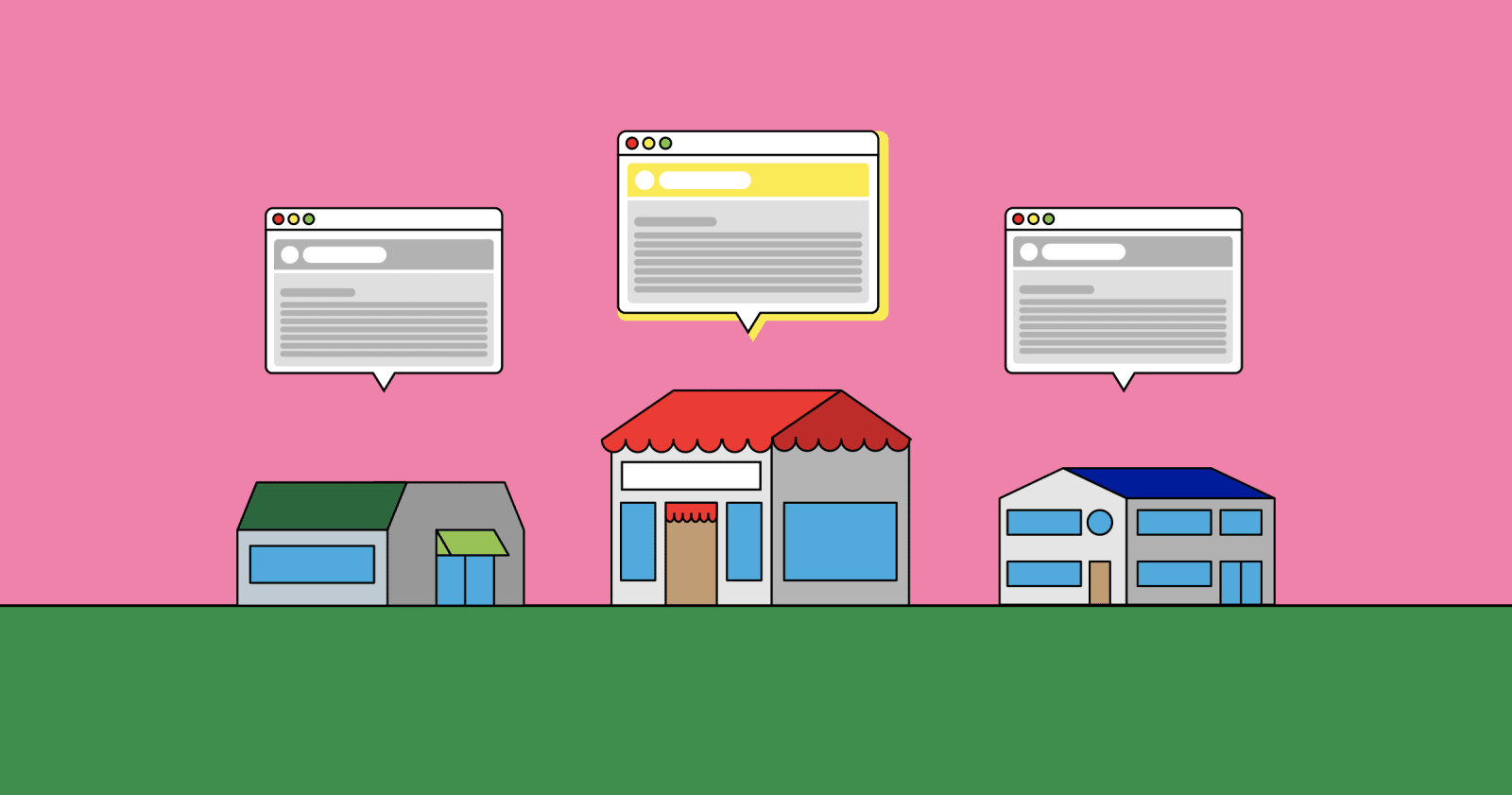
| Map pack (local pack) | Three Google Business Profiles plus a map | Proximity, profile completeness, reviews, categories, local links |
| Google Maps | The full ranked list behind the map pack | Same as above, with more results shown |
| Localised organic | Web pages, reordered by searcher location | Standard SEO plus location relevance on the page |
| Directory listings | Yelp, Justdial, industry directories | Their own authority — you compete by having a strong profile on them |
You can rank first in the map pack and be invisible in organic, or the reverse. Winning both means running two connected but distinct workstreams: profile optimisation for the map, and page optimisation for the organic SERP.
Why Proximity Caps What You Can Achieve
Proximity is the ranking factor you cannot optimise. A shop five kilometres from the searcher will struggle against an equal competitor five hundred metres away. This has a practical consequence: measuring map pack rankings from a single point — your office — is misleading. Local rank trackers that sample a grid of points across your service area give a far more honest picture, showing you the radius within which you actually compete.
The Local Ranking Factors That Matter
Google's own guidance on local ranking names three inputs: relevance, distance, and prominence. In practice those break down into a set of things you can control.
1. Google Business Profile Completeness
The profile is the single highest-leverage asset in local SEO, and most are half filled in. A complete profile includes:
- Exact business name as it appears on signage — no keyword stuffing, which risks suspension
- One primary category chosen precisely, plus relevant secondary categories
- Full address, or a declared service area for mobile businesses
- Opening hours including holiday exceptions
- A local phone number rather than a call-centre number
- Products and services listed individually with descriptions
- Attributes: wheelchair access, parking, payment methods, languages spoken
- At least ten real photographs, refreshed quarterly
Category selection deserves particular care. The primary category is one of the strongest relevance signals available, and choosing "restaurant" when you are a "seafood restaurant" costs you visibility on the exact queries that convert best.
2. Reviews and Ratings
Reviews influence both ranking and click-through. What matters is not just the star average but the velocity, the recency, and whether the review text contains the services people search for. A review saying "they fixed our boiler in Gulshan the same day" carries relevance signals a five-star rating with no text does not.
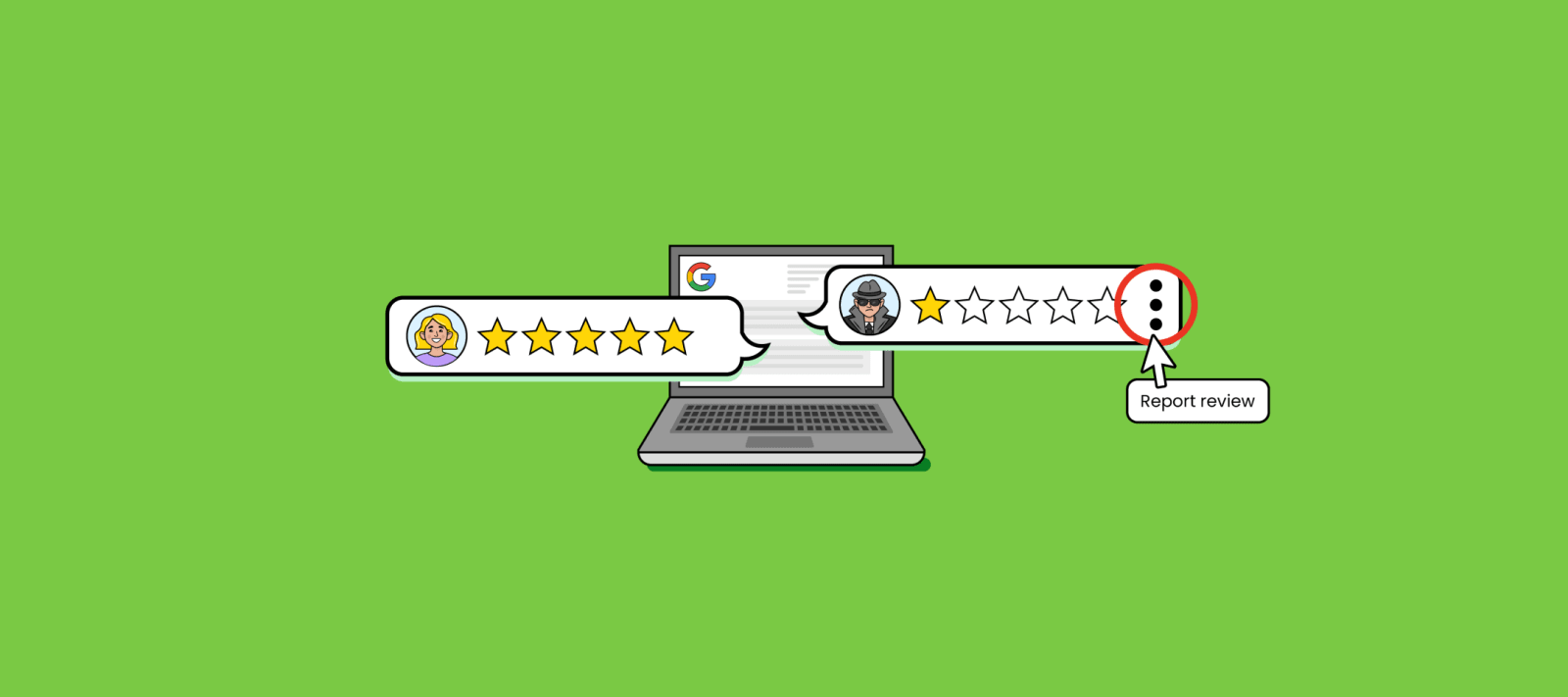
Build a simple, repeatable ask: request the review at the moment of highest satisfaction, send a direct link, and respond to every review within 48 hours — including the negative ones, publicly and without defensiveness. Never buy reviews or offer incentives for them; both violate Google's policies and the resulting cleanups remove genuine reviews too.
3. NAP Consistency and Citations
NAP stands for name, address, phone number. A citation is any mention of those details on another site. Google cross-references them to validate that your business exists where you claim. Inconsistencies — an old suite number, a disconnected mobile, a shortened business name — dilute confidence.
Audit citations at the start of any local engagement. Priority order:
- Google Business Profile, Bing Places, Apple Business Connect
- Major national directories relevant to your country
- Industry-specific directories (medical, legal, trade associations)
- Local chambers of commerce, community sites, sponsorship pages
4. On-Page Location Signals
Your website has to corroborate the profile. That means an address in the footer sitewide, embedded map on the contact page, LocalBusiness schema markup, and location terms used naturally in titles, headings, and body copy. If you have several branches, each needs its own page — not one page listing five addresses.
Structured data is the cleanest way to state your details in machine-readable form. The LocalBusiness schema type supports address, geo-coordinates, opening hours, price range, and department relationships. My guide to using schema markup covers implementation without breaking validation.
5. Local Links and Local Content
Links from geographically relevant sources — the local newspaper, a nearby supplier, a sponsored youth team, the town business association — do work that generic guest posts cannot. They tie your domain to a place. Depth beats volume here; ten genuine local links usually outperform a hundred directory submissions. If you want to understand how link value is assessed generally, my overview of backlinks covers the fundamentals.
Setting Up Local SEO: A Practical Sequence
Order matters. Doing content before the profile wastes months, because the profile is what surfaces first for the highest-intent queries.
| Phase | Work | Typical Timeframe |
|---|---|---|
| Week 1 | Claim and verify Google Business Profile, fix NAP everywhere | Verification can take 5–14 days |
| Weeks 2–3 | Complete profile, categories, services, photos, hours, attributes | Immediate indexing |
| Weeks 3–4 | Citation audit and cleanup, LocalBusiness schema, on-page location signals | Directories update over 4–8 weeks |
| Month 2 | Location and service pages, review generation process | Rankings begin shifting 6–12 weeks |
| Month 3+ | Local link building, Google Posts, ongoing review responses | Compounding |
Building Location Pages That Are Not Thin
A location page templated with the city name swapped out is the classic failure. Google has been filtering those out for years. A page that earns its place includes specifics only someone operating there would know: the neighbourhoods served, parking and transport details, staff based at that branch, local case examples, area-specific pricing or availability, and reviews from customers in that area.
If you genuinely serve fifty towns and cannot write fifty distinct pages, do not create fifty pages. Create one strong service-area page and expand as you accumulate real material for each location. Scaled page creation only works when each page carries genuine distinct value — the discipline behind good programmatic SEO is knowing where the real data comes from.
Google Posts and Q&A
Two underused profile features. Posts appear on your listing and expire after seven days for most types, so a weekly cadence keeps the profile visibly active. The Q&A section is public and anyone can answer — including competitors. Seed it yourself with the ten questions you actually get asked, answer them properly, and monitor for incorrect answers from strangers.
Measuring Local SEO Performance
Local performance data lives in more places than standard SEO data, and the profile insights are the part most people never open.
- Google Business Profile performance: searches that surfaced your listing split into direct and discovery, calls, direction requests, website clicks, and message counts.
- Google Search Console: impressions and positions for location-modified queries. Filter by queries containing your city name.
- GA4: organic sessions by landing page, plus conversions. My walkthrough of GA4 setup covers event configuration for calls and form fills.
- Grid rank tracking: map pack position sampled across a geographic grid rather than one point.
- Call tracking: a dedicated number on the website, with the profile keeping the primary number to preserve NAP consistency.
The metric that matters most for a local business is rarely traffic. It is direction requests and calls. A profile driving forty calls a month with modest website traffic is outperforming a site with three thousand sessions and no enquiries.
Diagnosing a Drop
When local visibility falls, work through causes in this order: profile suspension or edit, a category change, a duplicate listing appearing, NAP change somewhere authoritative, review loss, a competitor's new activity, then finally a core algorithm update. Most sudden local drops trace to the profile, not the website. A broader SEO audit is worth running if the profile checks out clean.
Common Local SEO Mistakes
- Keyword-stuffing the business name. "Dhaka Best Plumbing Services 24/7" invites suspension and competitor reports.
- Using a virtual office or a friend's address. Google verifies, and removal is permanent for repeat offences.
- Ignoring negative reviews. An unanswered one-star review does more damage than the rating itself.
- Duplicate listings. Two profiles for one location split your signals. Find and merge them.
- Setting it up once. Hours change, staff change, competitors move. A profile untouched for a year loses ground quietly.
- Treating the website as optional. The profile drives the map pack; the site drives everything below it.
Local SEO for Multi-Location Businesses
Once you pass roughly five locations, manual management stops scaling. What changes:
- A location hierarchy on the site: a locations hub linking to city pages, each linking to individual branch pages
- One Google Business Profile per physical location, managed through a location group
- Bulk upload and verification via a location management spreadsheet
- Branch-level review monitoring, since one weak location drags the brand average
- Internal linking so branch pages are reachable within two clicks of the homepage — the same principle covered in my piece on website architecture
Consistency across locations matters more than perfection at any one. Google evaluates brand-level prominence as well as individual listings.
Why Work With Sadekur Rahman
I approach local SEO as an operations problem as much as a marketing one. The profile, the citations, the review process, and the site have to agree with one another, and staying in agreement takes a system rather than a one-off project. Clients get a citation audit, a fully rebuilt profile, schema implementation, a review generation workflow their staff can actually run, and grid-based rank reporting that shows where they win and where they do not.
If your business depends on customers within a defined radius, look at my local SEO services and case studies, review plans and pricing, or book a meeting to walk through your current visibility.
Frequently Asked Questions
How long does local SEO take to work?
Profile optimisation can shift map pack visibility within two to six weeks, because Google re-evaluates listings quickly. Organic location pages and local link building follow the normal timeline of three to six months. Businesses in low-competition areas often see movement faster than that.
Can I do local SEO without a physical address?
Yes, if you travel to customers. Register as a service-area business, hide the address, and declare the regions you cover. What you cannot do is invent an address or use a mailbox — Google verifies locations and treats fabricated ones as a policy violation.
Do I need a website if I have a Google Business Profile?
The profile alone can generate calls, but it caps your ceiling. A site lets you rank in localised organic results, answer questions in depth, capture enquiries outside business hours, and build the topical authority that supports the profile. The two reinforce each other.
How many reviews do I need to compete?
There is no threshold, only a comparison. Look at the three profiles currently in the map pack for your main query and aim to match their review count and beat their recency. Steady accumulation is worth more than a sudden burst, which can look manipulated.

Written by Sadekur Rahman
SEO & Website Strategy Specialist at Pixelvega and SEO Executive at Daily Amar Desh. 6+ years helping brands grow with data-driven SEO.