How to Rank for "Near Me" Searches Without Physical Location (SAB Guide)
Learn how service area businesses can rank for "near me" searches without a storefront. Complete guide to local SEO for home-based and mobile businesses.

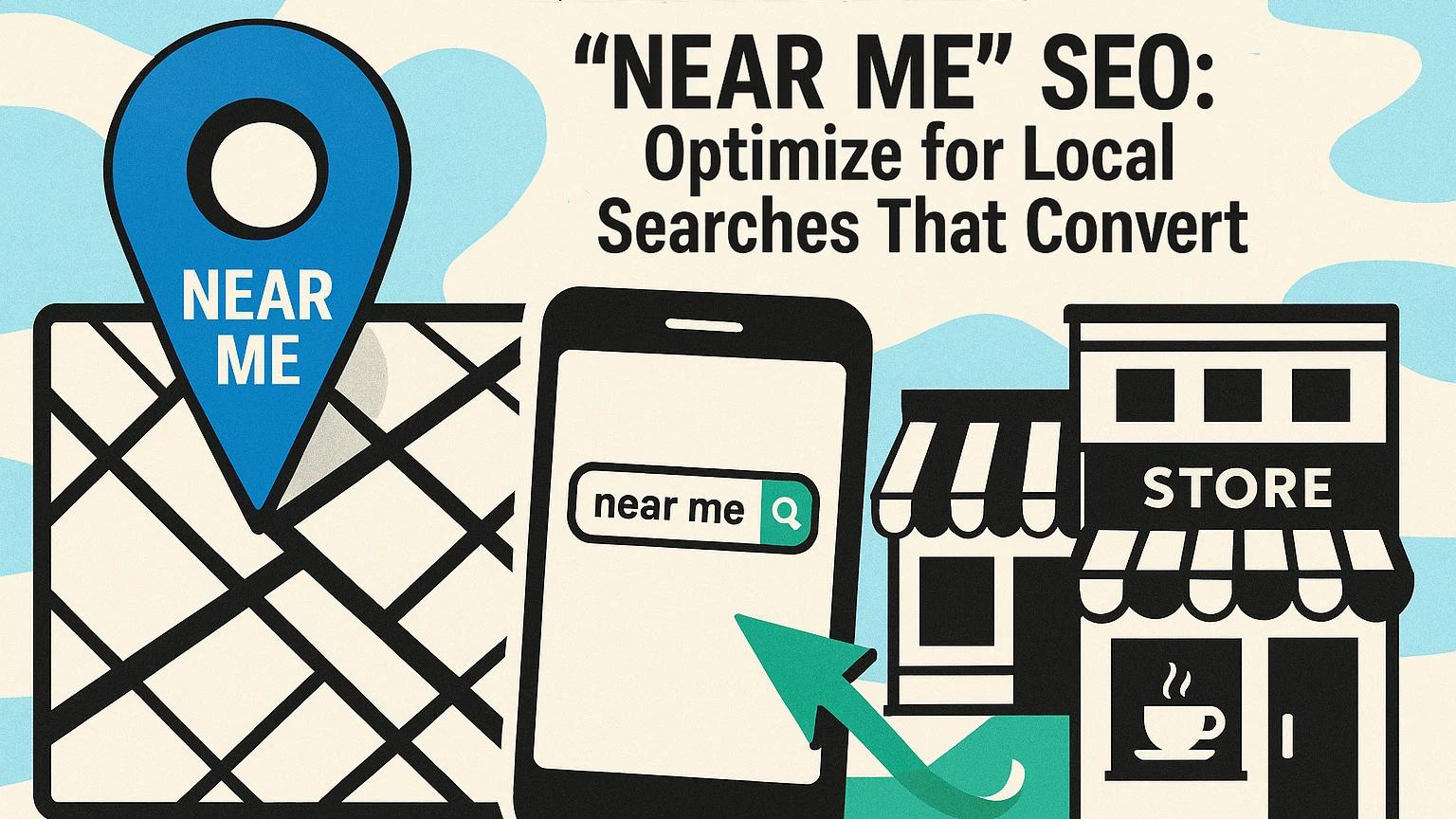
"Plumber near me." "Electrician near me." "House cleaning near me." These searches represent some of the highest-intent queries on Google people actively looking to hire services right now. But if you operate from home, work mobile, or serve customers at their locations rather than a physical storefront, you might think "near me" rankings are impossible for you.
The truth is more nuanced. Service area businesses (SABs) contractors, consultants, home service providers, and mobile businesses absolutely can rank for "near me" searches. However, the strategies differ significantly from traditional brick-and-mortar businesses. You can't rely on foot traffic or a prominent storefront to signal your local presence.
This comprehensive guide reveals exactly how service area businesses can dominate "near me" searches, capture high-intent local traffic, and convert searchers into customers even without a physical location customers visit.
Understanding "Near Me" Searches and Service Area Businesses
Before optimizing, you need to understand how "near me" searches work and why service area businesses face unique challenges.
What Are "Near Me" Searches?
"Near me" searches are location-based queries where users append "near me" to their search term or where Google interprets location intent even without those specific words.
Examples of near me searches:
- Explicit: "plumber near me," "lawyer near me"
- Implicit: "pizza delivery," "emergency dentist," "dog groomer"
- Voice searches: "OK Google, find a locksmith near me"
Search volume trends:
- "Near me" searches have grown over 900% in recent years
- 76% of people who search for something nearby visit a business within a day
- 28% of those searches result in purchases
- Mobile devices account for 60%+ of "near me" searches
The stakes are high these searches represent customers actively ready to buy, often in urgent need of services.
What Is a Service Area Business?
A Service Area Business (SAB) serves customers at their locations rather than at a business address. Common examples include:
Home services:
- Plumbers, electricians, HVAC technicians
- House cleaners, landscapers, pest control
- Contractors, painters, carpenters
Professional services:
- Mobile notaries, real estate agents
- Home healthcare providers
- Pet groomers, trainers, veterinarians
Specialized services:
- Mobile auto repair, detailing
- Event services (DJs, photographers, caterers)
- Consultants, coaches, trainers
These businesses face a critical challenge: Google requires a physical address to verify businesses, but you may not want to display a home address publicly or you might work entirely mobile.
Learn more about local SEO fundamentals for all business types.
The SAB Challenge for "Near Me" Rankings
Service area businesses face unique obstacles:
No visible storefront:
- Customers can't drive by and see your business
- No physical presence reinforces your location
- Harder to build local brand recognition
Hidden address requirement:
- Google allows hiding your address for SABs
- But hiding it removes the map pin
- Proximity ranking factor becomes less direct
Broader service areas:
- Most SABs serve multiple cities/neighborhoods
- Harder to optimize for all locations simultaneously
- Competition from businesses in each service area
Verification complexity:
- Google still requires a real address for verification
- P.O. boxes and virtual offices violate guidelines
- Residential addresses require proper handling
Despite these challenges, strategic optimization allows SABs to rank competitively for "near me" searches across their service areas.
The 8 Core Strategies for SAB "Near Me" Rankings
These strategies work specifically for service area businesses without physical customer-facing locations.
Strategy 1: Optimize Your Google Business Profile for Service Areas
Your Google Business Profile (GBP) is the foundation of "near me" visibility, but SABs must configure it differently than storefronts.
Critical GBP setup for SABs:
Hide your street address:
- Go to Google Business Profile
- Click "Info" → "Address"
- Select "I serve customers at their location"
- Hide your street address from public view
- Your city/region remains visible
Define service areas precisely:
Google allows three ways to define service areas:
- Radius: Single distance from your address (e.g., 25 miles)
- Cities: List specific cities you serve (recommended)
- Zip codes: Target specific postal codes
Best practice approach:
List specific cities rather than using a radius:
- More targeted to areas you actually serve
- Appears in searches from those specific cities
- Allows optimization for multiple distinct markets
- Shows professionalism (vs. vague radius)
Example: Instead of "25-mile radius from Dallas," list: "Dallas, Plano, Frisco, McKinney, Allen, Richardson, Garland, Irving, Arlington, Fort Worth"
Service areas limit: Google allows up to 20 service areas. Choose strategically:
- Prioritize areas with highest demand
- Focus on areas you can realistically serve well
- Include neighboring areas of your base location
- Expand strategically as you grow
Category optimization:
Your primary category is critical for "near me" searches:
- Choose the most specific category available
- Avoid generic categories when specific ones exist
- Example: "Plumbing Service" not "Contractor"
- Add relevant secondary categories (max 10)
Learn comprehensive profile optimization through our local SEO services.
Strategy 2: Create Location-Specific Landing Pages
Since you can't rely on a physical address for local signals, location-specific content becomes essential.
Landing page structure:
Create individual pages for each major city/area you serve:
- yoursite.com/plumbing-dallas
- yoursite.com/plumbing-plano
- yoursite.com/plumbing-frisco
Essential elements for each location page:
Unique, valuable content (500-1000 words minimum):
- Don't use templates with just the city name changed
- Include local information specific to that area
- Reference local landmarks, neighborhoods, regulations
- Address area-specific customer concerns
Local optimization elements:
- H1: "[Service] in [City], [State]"
- Title tag: "[Service] in [City] | [Business Name]"
- Meta description: Mention city and service benefits
- URL slug: /[service]-[city]
- Image alt text: Include location references
Structured content sections:
1. Introduction (mention city/neighborhoods)
2. Service overview specific to area
3. Local expertise/experience
4. Areas we serve (list neighborhoods)
5. Why choose us in [city]
6. Testimonials from [city] customers
7. Service area map
8. Clear call-to-action
Embedded Google Map: Show your service area visually with a custom map highlighting the neighborhoods you serve.
Local testimonials: Feature customer reviews from that specific city/area on the relevant landing page.
Schema markup:
<script type="application/ld+json">
{
"@context": "https://schema.org",
"@type": "Service",
"serviceType": "Plumbing Services",
"provider": {
"@type": "LocalBusiness",
"name": "Your Business Name",
"areaServed": {
"@type": "City",
"name": "Dallas",
"containedIn": {
"@type": "State",
"name": "Texas"
}
}
}
}
</script>
Check our guide on using schema markup for detailed implementation.
Strategy 3: Build Hyper-Local Content
Beyond service pages, create content that demonstrates deep local knowledge and community involvement.
Neighborhood guides: "Complete Guide to [Neighborhood Name] for [Target Audience]"
- Local attractions and landmarks
- Demographics and characteristics
- Common service needs in that area
- Why you love serving that community
Local problem-solving content:
- "[City] Building Code Requirements for [Service]"
- "Common [Service] Issues in [Area] and How to Fix Them"
- "Preparing Your [City] Home for [Season]"
Community involvement content:
- Local event sponsorships
- Charity work in specific neighborhoods
- Partnerships with local organizations
- Before/after projects in the area (with permission)
Local news and trends:
- Comment on local developments affecting your industry
- Address area-specific concerns
- Reference local weather, events, regulations
This content signals to Google that you're genuinely embedded in the community, not just targeting keywords.
Explore more strategies in our content marketing guide.
Strategy 4: Optimize for Voice Search and Mobile
"Near me" searches are predominantly mobile and increasingly voice-activated. Optimization must account for this.
Mobile optimization essentials:
Technical requirements:
- Mobile-responsive design (non-negotiable)
- Page load time under 3 seconds on mobile
- Large, tappable buttons for calls and directions
- Simple navigation optimized for thumb scrolling
- Click-to-call phone numbers prominently displayed
Voice search optimization:
Voice queries differ from typed searches:
- Typed: "plumber dallas"
- Voice: "Hey Siri, who's a good plumber near me?"
Optimization tactics:
- Use natural, conversational language
- Answer questions directly and concisely
- Create FAQ sections addressing common queries
- Optimize for question keywords: who, what, where, when, why, how
- Use long-tail, conversational keyword phrases
Featured snippet optimization:
Voice assistants often pull answers from featured snippets:
- Provide direct answers to common questions
- Use bullet lists and numbered steps
- Keep answers concise (40-60 words for voice)
- Structure content with clear headings
Strategy 5: Generate Location-Specific Reviews
Reviews are powerful ranking signals for "near me" searches, especially when they mention specific locations.
Review generation strategy:
Request reviews systematically:
- After every completed job
- Automated email follow-ups 24 hours after service
- SMS requests (often higher response rate)
- In-person requests immediately after service
Encourage location mentions:
When requesting reviews, provide helpful prompts:
- "Please mention which area we served you in"
- "Let others in [city] know about your experience"
- Include a template suggestion mentioning the city
Example review template to share:
"[Business Name] provided excellent [service] at my home in
[neighborhood/city]. [Specific details about service quality].
I highly recommend them to anyone in [area] needing [service]."
Respond to all reviews:
- Thank reviewers and mention their location
- "Thank you for choosing us for your [city] home!"
- Demonstrates local engagement
- Provides additional location keyword signals
Review platforms to prioritize:
| Platform | Importance for "Near Me" | Strategy |
| Critical | Primary focus, impacts Map Pack | |
| Yelp | High | Influences local search results |
| Medium | Social proof and local visibility | |
| Nextdoor | High (for SABs) | Hyper-local neighborhood platform |
| Angi/HomeAdvisor | High (home services) | Industry-specific authority |
Strategy 6: Build Local Citations and Backlinks
Citations (NAP mentions) and backlinks from local sources strengthen your geographic relevance signals.
High-value local citations:
National directories:
- Google Business Profile (obviously)
- Bing Places
- Apple Maps
- Yelp
Local directories:
- Chamber of Commerce
- Better Business Bureau
- Local news websites
- City/county business directories
- Community organization sites
Industry-specific directories: Find directories specific to your service type:
- HomeAdvisor, Angi, Thumbtack (home services)
- Avvo, FindLaw (legal)
- Healthgrades (medical)
Local backlink opportunities:
Community involvement:
- Sponsor local sports teams
- Support local charities
- Participate in community events
- Partner with local nonprofits
Local media:
- Pitch stories to local news sites
- Offer expert commentary on local issues
- Write guest posts for community blogs
- Get featured in local business roundups
Strategic partnerships:
- Partner with complementary local businesses
- Join local business associations
- Cross-promote with non-competing services
- Collaborate on local events
Learn comprehensive link building in our backlink building guide.
Strategy 7: Leverage Google Posts and Updates
Google Posts appear directly on your Business Profile and in local search results, providing fresh content signals.
Effective posting strategy:
Post frequency:
- Minimum: Weekly
- Optimal: 2-3 times per week
- During promotions: Daily
Post types for SABs:
Service updates:
- New services in specific areas
- Seasonal service reminders
- Emergency availability announcements
Location-specific offers: "Special offer for [City] residents this week!"
- Creates urgency
- Targets specific service area
- Drives immediate action
Customer success stories: "Just completed [service] in [neighborhood]!"
- Include before/after photos
- Mention specific location served
- Thank the customer (with permission)
Community involvement:
- Event sponsorships
- Local charity work
- Area-specific initiatives
Best practices:
- Include high-quality images
- Use clear calls-to-action
- Add relevant links
- Include location mentions
- Track which posts drive engagement
Strategy 8: Implement Advanced Local Schema Markup
Beyond basic schema, advanced markup helps Google understand your service areas and offerings.
Service Area Business schema:
<script type="application/ld+json">
{
"@context": "https://schema.org",
"@type": "HomeAndConstructionBusiness",
"name": "Your Business Name",
"description": "Professional plumbing services",
"telephone": "+1-555-123-4567",
"url": "https://yourwebsite.com",
"areaServed": [
{
"@type": "City",
"name": "Dallas",
"containedIn": {
"@type": "State",
"name": "Texas"
}
},
{
"@type": "City",
"name": "Plano",
"containedIn": {
"@type": "State",
"name": "Texas"
}
}
],
"hasOfferCatalog": {
"@type": "OfferCatalog",
"name": "Plumbing Services",
"itemListElement": [
{
"@type": "Offer",
"itemOffered": {
"@type": "Service",
"name": "Emergency Plumbing"
}
}
]
}
}
</script>
Review schema:
Mark up customer reviews to increase visibility in search results and provide trust signals.
Breadcrumb schema:
Help Google understand your site structure and location page relationships.
Advanced Tactics for Competitive Markets
In highly competitive service areas, these advanced strategies provide additional edge.
Tactic 1: Target Micro-Locations
Instead of just targeting major cities, optimize for specific neighborhoods and suburbs.
Micro-location strategy:
Create content for neighborhoods:
- "Plumbing Services in [Specific Neighborhood], [City]"
- Address unique characteristics of each area
- Reference local landmarks and features
Benefits:
- Less competition than city-level keywords
- More specific geographic targeting
- Better conversion (highly targeted searchers)
- Accumulates to broader city rankings
Tactic 2: Optimize for Emergency and Urgent Searches
Many SAB services involve urgent needs, which have different search patterns.
Emergency search optimization:
Keywords to target:
- "emergency [service] near me"
- "24/7 [service]"
- "same day [service]"
- "[service] open now"
Profile optimization:
- List "24/7" in business name ONLY if truly 24/7
- Set accurate hours (including emergency availability)
- Use "Open 24 hours" attribute if applicable
- Respond quickly to messages and calls
Content strategy:
- Create dedicated emergency service pages
- Emphasize response time and availability
- Include emergency-specific calls-to-action
- Display phone number prominently
Tactic 3: Use Nextdoor Strategically
Nextdoor is a hyper-local social platform where neighbors recommend services ideal for SABs.
Nextdoor strategy:
Claim your business:
- Create and verify your business profile
- Complete all profile information
- Add services and service areas
Engage authentically:
- Respond to recommendation requests
- Share helpful tips (not sales pitches)
- Build reputation as helpful community member
- Encourage satisfied customers to recommend you
Sponsor local content:
- Nextdoor offers local advertising
- Highly targeted to specific neighborhoods
- Reaches people actively seeking services
Tactic 4: Create Video Content for Local SEO
Video content increasingly appears in "near me" searches and provides engagement signals.
Video content ideas:
Service area tours: "Serving [City]: Areas We Cover and Why We Love This Community"
Before/after projects: Show completed work in specific neighborhoods (with permission)
Local tips and advice: "Preparing Your [City] Home for Winter" "Common [Service] Issues in [Area]"
Distribution:
- YouTube (optimized with location in title/description)
- Google Business Profile
- Website location pages
- Social media channels
Learn more about video content strategies.
Common SAB Mistakes That Kill "Near Me" Rankings
Avoid these errors that prevent service area businesses from appearing in local searches.
Mistake 1: Using Virtual Office or P.O. Box Address
Google explicitly prohibits virtual offices and P.O. boxes for most business types.
Solution: Use your actual business address (home office if legitimate) or legitimate commercial space. Hide the street address but use it for verification.
Mistake 2: Listing Too Broad a Service Area
Claiming you serve a 100-mile radius or entire states dilutes your local signals.
Solution: Focus on areas you genuinely serve well. Quality beats quantity. Better to rank #1 in 10 cities than #20 in 50.
Mistake 3: Duplicate Content Across Location Pages
Using identical content with just city names swapped triggers duplicate content issues.
Solution: Write unique content for each location page. Include genuinely local information, references, and insights.
Mistake 4: Neglecting Mobile Experience
If your site doesn't work well on mobile, you lose most "near me" traffic.
Solution: Test your site on multiple devices. Ensure fast loading, easy navigation, and clear calls-to-action on mobile.
Mistake 5: Inconsistent NAP Across Platforms
Different business information across directories confuses Google.
Solution: Maintain identical NAP (Name, Address, Phone) everywhere. Audit and fix inconsistencies systematically.
Check our technical SEO checklist for comprehensive optimization.
Measuring "Near Me" Ranking Success
Track these metrics to understand if your strategies are working.
Key Metrics to Monitor
Google Business Profile Insights:
- "Discovery searches" (how customers find you)
- "Direct searches" (branded searches)
- Direction requests (indicates intent)
- Phone calls from profile
- Website clicks
Ranking positions: Use local rank tracking tools to monitor positions for:
- "[service] near me"
- "[service] in [city]"
- "[service] [neighborhood]"
- Voice search variations
Organic traffic by location: Google Analytics → Acquisition → Geography
- Track traffic from each service area
- Identify which locations drive most traffic
- Optimize further for successful areas
Conversion tracking:
- Form submissions by landing page
- Phone calls from location pages
- Direction requests
- Service booking completions
Tools for measurement:
| Tool | Purpose | Price Range |
| BrightLocal | Local rank tracking | $29-79/month |
| Google Analytics | Traffic and conversions | Free |
| Google Search Console | Search visibility | Free |
| CallRail | Phone call tracking | $45-145/month |
| Local Falcon | Precise local rankings | $25-200/month |
When to Hire Professional Local SEO Services
Service area business SEO is complex and time-intensive. Consider professional help when:
You Need Faster Results
DIY local SEO takes 3-6 months to show significant results. Professional services often deliver faster through:
- Established processes and tools
- Experience with what works
- Ability to execute all strategies simultaneously
- Avoiding trial-and-error mistakes
You Serve Multiple Areas
Each service area requires dedicated optimization:
- Individual location pages
- Area-specific content
- Local citation building
- Review generation per location
Professional management becomes cost-effective at scale.
Competition Is Intense
In competitive markets, every ranking factor matters:
- Comprehensive technical optimization
- Strategic content development
- Sophisticated backlink acquisition
- Ongoing monitoring and adjustment
You Lack Time or Expertise
Effective local SEO requires:
- 10-20 hours weekly for meaningful DIY efforts
- Technical SEO knowledge
- Content creation skills
- Understanding of local algorithms
Professional SAB SEO Services
As an experienced SEO specialist, I help service area businesses dominate "near me" searches through:
- Complete Google Business Profile optimization for SABs
- Strategic service area definition and expansion
- Location-specific landing page creation
- Hyper-local content strategy and production
- Citation building across relevant directories
- Local backlink acquisition
- Review generation systems
- Mobile and voice search optimization
- Monthly monitoring and strategy refinement
My local SEO services are specifically designed for service area businesses competing without physical storefronts.
Frequently Asked Questions
Can I rank for "near me" searches if I work from home?
Yes, absolutely. Google allows home-based service area businesses to hide their street address while still appearing in "near me" searches. The key is properly configuring your Google Business Profile as a service area business, defining your service areas clearly, and building strong local signals through content, reviews, and citations. Many highly successful SABs operate from home offices and dominate local search.
How many service areas should I list in my Google Business Profile?
Google allows up to 20 service areas, but quality matters more than quantity. Start with 5-10 areas you genuinely serve well, where you can respond quickly and provide excellent service. As you build authority and expand operations, strategically add new service areas. Listing too many areas dilutes your local signals and makes it harder to rank strongly in any specific location.
Do I need a different website for each city I serve?
No, multiple websites create duplicate content issues and dilute your domain authority. Instead, create dedicated location-specific landing pages on your main website (yoursite.com/service-city). Each page should have unique, valuable content specific to that location. This approach builds authority on a single domain while targeting multiple geographic areas effectively.
How long does it take to rank for "near me" searches as a service area business?
Results vary by competition level and starting point. Less competitive suburban areas might show results in 4-8 weeks. Competitive urban markets typically require 3-6 months of consistent optimization. Factors affecting timeline include current review count, citation presence, content quality, and competitor strength. The key is consistent execution across all ranking factors simultaneously.
Dominate "Near Me" Searches in Your Service Area
Ranking for "near me" searches without a physical storefront is entirely achievable with the right strategies. Service area businesses can compete effectively and often win against traditional brick-and-mortar competitors by focusing on location-specific optimization, building strong local signals, and demonstrating genuine community engagement.
Start by properly configuring your Google Business Profile for service areas, create location-specific landing pages, generate reviews that mention your service areas, and build local citations and content that establish your presence in each community you serve.
The businesses that win "near me" searches aren't always the oldest or biggest they're the ones that execute local SEO fundamentals consistently and comprehensively.
Get Expert Help Ranking for "Near Me" Searches
If you're ready to dominate local search in your service areas and capture customers actively searching for your services, professional guidance accelerates your success.
My comprehensive local SEO services are specifically designed for service area businesses:
- Strategic Google Business Profile optimization for SABs
- Location-specific landing page creation
- Hyper-local content strategy and writing
- Review generation systems for each service area
- Local citation building and management
- Mobile and voice search optimization
- Ongoing monitoring and monthly reporting
Ready to appear when customers in your area search "[your service] near me"? Book a free consultation to discuss your service areas, analyze your competition, and create a customized local SEO strategy.
Explore my full range of SEO services including content creation, technical optimization, and comprehensive search marketing. Check out my case studies to see how I've helped service area businesses dominate local search in competitive markets.
Related Resources:
Don't let lack of a storefront keep you invisible in local search. Contact me today to start ranking for "near me" searches and capturing customers actively looking for your services right now.

Written by Sadekur Rahman
SEO & Website Strategy Specialist at Pixelvega and SEO Executive at Daily Amar Desh. 6+ years helping brands grow with data-driven SEO.