How to Outrank Competitors in Google Map Pack (3-Pack Strategy)
Learn proven strategies to dominate the Google Map Pack and outrank competitors. Complete 3-pack optimization guide with actionable tactics for top rankings.

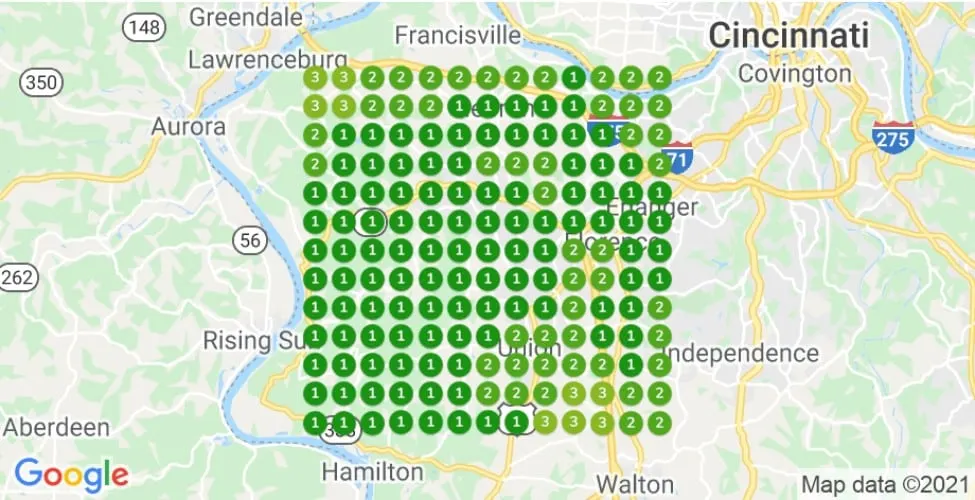
Appearing in Google's Map Pack those coveted top three local business results with map pins can transform your business overnight. But when you're stuck in position #4 or lower while competitors dominate the 3-pack, every search represents lost revenue flowing directly to your competition.
The Map Pack receives the majority of clicks for local searches. Studies show that businesses in the 3-pack receive up to 126% more clicks than those ranking #4 and beyond. If you're not in the top three, you're essentially invisible to most potential customers searching for your services.
This comprehensive guide reveals the exact strategies to outrank your competitors and claim your position in the Google Map Pack. Whether you're currently ranking outside the pack or fighting for the #1 position, these tactics will help you dominate local search in your market.
Understanding the Google Map Pack Algorithm
Before you can outrank competitors, you need to understand how Google determines which businesses appear in the coveted 3-pack.
What Is the Google Map Pack?
The Google Map Pack (also called the Local 3-Pack or Snack Pack) is the prominent box displaying three local businesses that appears at the top of search results for location-based queries. It includes:
- Business name
- Star rating and review count
- Business category
- Address (or service area)
- Phone number
- Hours of operation
- Map with location pins
This premium placement appears above traditional organic results, making it the most valuable real estate in local search.
The Three Pillars of Map Pack Rankings
Google uses three primary factors to determine Map Pack rankings:
1. Relevance: How well your business matches the searcher's query
2. Distance: How close you are to the searcher or the location in their query
3. Prominence: How well-known, authoritative, and trustworthy your business appears
Within these three pillars, dozens of specific ranking factors influence your position. Optimizing all three pillars simultaneously is the key to outranking competitors.
Conducting Competitive Analysis
You can't outrank competitors without understanding what they're doing right and where they're vulnerable.
Step 1: Identify Your True Competitors
Your Map Pack competitors aren't necessarily your business competitors. They're whoever currently occupies the top 3 positions for your target keywords.
How to identify Map Pack competitors:
- Search your primary service + location (e.g., "dentist Dallas")
- Note the three businesses in the Map Pack
- Repeat for 5-10 variations of your main keywords
- Identify businesses that consistently appear
- Create a list of your 3-5 main Map Pack competitors
Pro tip: Use incognito mode and test from different locations within your service area to get accurate results.
Step 2: Analyze Competitor Profiles
Once you've identified competitors, audit their Google Business Profiles systematically.
Competitive analysis checklist:
| Factor | Your Business | Competitor A | Competitor B | Competitor C |
| Total reviews | ___ | ___ | ___ | ___ |
| Average rating | ___ | ___ | ___ | ___ |
| Recent reviews (last 30 days) | ___ | ___ | ___ | ___ |
| Total photos | ___ | ___ | ___ | ___ |
| Primary category | ___ | ___ | ___ | ___ |
| Posts frequency | ___ | ___ | ___ | ___ |
| Q&A engagement | ___ | ___ | ___ | ___ |
| Website quality | ___ | ___ | ___ | ___ |
| Service listings | ___ | ___ | ___ | ___ |
This analysis reveals exactly where you're behind and where you have opportunities to surpass competitors.
Step 3: Analyze Competitor Citations and Backlinks
Beyond Google Business Profile, examine their broader online presence.
What to analyze:
- Number and quality of local citations
- Backlink profile strength
- Social media presence and engagement
- Industry directory listings
- Local partnerships and sponsorships
Use tools like Ahrefs, SEMrush, or Moz to analyze competitor backlinks. Our guide on using Ahrefs for competitor analysis provides detailed instructions.
The 10 Most Powerful Map Pack Ranking Factors
Understanding and optimizing these factors gives you the competitive edge needed to reach the top 3.
1. Review Quantity and Quality
Reviews are arguably the most powerful ranking factor. Businesses with more high-quality reviews consistently outrank those with fewer.
Why reviews matter:
- Direct ranking signal (quantity)
- Quality signal (average rating)
- Recency signal (recent reviews count more)
- User-generated content (keyword-rich reviews help relevance)
- Click-through rate impact (higher ratings get more clicks)
Competitive review strategy:
Assess the gap: If competitors average 150 reviews and you have 50, you need aggressive review generation.
Set specific goals:
- Month 1: Gain 10 new reviews
- Month 2: Gain 15 new reviews
- Month 3: Gain 20 new reviews
Quality over quantity: One 5-star review with detailed, keyword-rich feedback beats five generic "great service" reviews.
How to accelerate review generation:
- In-person requests: Ask immediately after service delivery
- Automated email sequences: Send review requests 24-48 hours after service
- SMS follow-ups: Text message requests often get higher response rates
- Make it effortless: Provide direct review link, not instructions
- Timing matters: Request reviews when satisfaction is highest
- Staff training: Make review requests part of your service protocol
Learn more about reputation management through our local SEO services.
2. Google Business Profile Optimization
Complete, accurate, and optimized profiles outrank sparse, neglected ones.
Critical optimization elements:
Business name:
- Use your exact legal name only
- Never add keywords (violates guidelines)
- Consistency with all other citations
Categories:
- Choose the most specific primary category
- Add 5-10 relevant additional categories
- Research what top competitors use
Business description:
- Use all 750 characters
- Include primary keywords naturally
- Focus on services and differentiators
- Write for humans, not just algorithms
Attributes:
- Select all applicable attributes
- Highlights like "veteran-owned" or "women-led" can increase clicks
- Service attributes help relevance
Services:
- List all services individually
- Include descriptions for each
- Add pricing when possible
- Use keyword-rich service names naturally
3. NAP Consistency (Name, Address, Phone)
Inconsistent business information confuses Google and dilutes your authority.
What needs to be identical:
Your business name, address, and phone number must match exactly across:
- Google Business Profile
- Website (every page footer and contact page)
- All directory listings (Yelp, Facebook, industry directories)
- Social media profiles
- Citation sources
Common inconsistencies that hurt rankings:
- "123 Main St." vs. "123 Main Street"
- "Suite 100" vs. "#100" vs. "Ste 100"
- "(555) 123-4567" vs. "555-123-4567"
- "Smith & Sons" vs. "Smith and Sons"
How to fix NAP issues:
- Standardize your preferred format
- Update your website first
- Update Google Business Profile
- Audit and update all major citations
- Use citation management tools for scale
Our technical SEO checklist includes detailed NAP audit procedures.
4. Local Content and Keywords
Your website must demonstrate local relevance through strategic content optimization.
Local content strategy:
Location pages: Create dedicated pages for each city/neighborhood you serve:
- Unique content (not templates)
- Local landmarks and references
- Neighborhood-specific services
- Embedded Google Maps
- Local testimonials
Blog content:
- "[Service] in [Location]" guides
- Local event participation
- Community involvement stories
- Local industry insights
- Area-specific tips and advice
On-page optimization:
- Include city/neighborhood in title tags
- Use local keywords in H1 and H2 headings
- Add location to meta descriptions
- Natural integration throughout content
- Avoid keyword stuffing
Check our guide on creating SEO-friendly content for detailed optimization tactics.
5. Citation Building
Citations (mentions of your NAP across the web) build authority and trust signals.
High-impact citation sources:
National directories:
- Google Business Profile (obviously)
- Bing Places
- Apple Maps
- Yelp
- Yellow Pages
- Better Business Bureau
Industry-specific directories:
- Varies by business type
- Often more valuable than general directories
- Examples: Avvo (lawyers), Healthgrades (medical), Houzz (home services)
Local directories:
- Chamber of Commerce
- Local business associations
- City/county business listings
- Local newspapers
- Community websites
Citation quality metrics:
| Citation Source | Domain Authority | Relevance | Priority |
| Industry directory | 60+ | High | Very High |
| National directory | 70+ | Medium | High |
| Local directory | 30-50 | High | High |
| General directory | 40+ | Low | Medium |
Focus on quality over quantity. Twenty highly relevant citations beat 100 low-quality ones.
6. Website Quality and Authority
Your website's overall quality and authority influence Map Pack rankings.
Website ranking factors:
Technical excellence:
- Mobile-responsive design (non-negotiable)
- Fast loading speed (under 3 seconds)
- HTTPS security (SSL certificate)
- Clean, error-free code
- Proper URL structure
On-page SEO:
- Optimized title tags and meta descriptions
- Strategic header tag usage
- Image optimization with alt text
- Internal linking structure
- Schema markup implementation
Content quality:
- Comprehensive service descriptions
- Helpful blog content
- Customer success stories
- Industry expertise demonstration
- Regular content updates
Learn comprehensive website optimization through our SEO service guide.
7. Backlink Profile Strength
Quality backlinks from local and industry sources signal authority to Google.
High-value local backlinks:
Local organizations:
- Chamber of Commerce
- Better Business Bureau
- Local business associations
- Rotary Club or service organizations
Community involvement:
- Event sponsorships
- Charity partnerships
- Local sports teams
- School programs
Media coverage:
- Local news features
- Industry publications
- Community blogs
- Press releases
Strategic partnerships:
- Complementary businesses
- Supplier/vendor relationships
- Professional associations
- Trade groups
Local content opportunities:
- Write for local publications
- Guest posts on community blogs
- Expert commentary for local news
- Resource page inclusions
Explore comprehensive backlink building strategies.
8. Engagement Signals
Google monitors how users interact with your Business Profile and rewards engagement.
Key engagement metrics:
Profile interactions:
- Click-through to website
- Phone calls initiated
- Direction requests
- Photo views
- Post engagement
Review interactions:
- Review responses (respond to ALL reviews)
- Helpful vote on reviews
- Q&A participation
- Photo uploads by customers
Improving engagement:
- Respond to every review within 24 hours
- Post weekly updates with calls-to-action
- Upload new photos monthly
- Seed and answer Q&A questions
- Encourage photo uploads from customers
- Use Google Posts with CTAs that drive clicks
9. Proximity to Searcher
While you can't change your physical location, you can optimize for proximity factors.
Strategies for proximity optimization:
Service area businesses:
- Define service areas precisely
- Create location-specific landing pages
- Use neighborhood-specific content
- Target long-tail local keywords
Multiple locations:
- Create separate profiles for each location
- Optimize each individually
- Build location-specific citations
- Target micro-local keywords
Competing against closer businesses: When competitors are physically closer, you must dominate other ranking factors (reviews, prominence, relevance) to compensate.
10. Google Posts and Profile Activity
Active, regularly updated profiles outrank stale, inactive ones.
Posting strategy:
Post frequency:
- Minimum: Weekly posts
- Optimal: 2-3 posts per week
- Special occasions: Daily during promotions or events
Post types:
- Updates: Business news, new services, awards
- Offers: Promotions, discounts, special deals
- Events: Workshops, open houses, community participation
- Products: New offerings, seasonal items
Best practices:
- Include high-quality images
- Write compelling CTAs
- Use relevant keywords naturally
- Keep text concise (150-300 words)
- Track which post types drive engagement
Advanced Competitive Tactics
Once you've mastered the fundamentals, implement these advanced strategies to pull ahead.
1. Leverage Review Velocity
Google weights recent reviews more heavily than old ones. A surge in new reviews signals growing popularity.
Velocity strategy:
If competitors have 200 reviews accumulated over 5 years, but you gain 50 high-quality reviews in 3 months, your velocity might overcome their quantity advantage.
Implementation:
- Launch systematic review campaigns
- Create urgency around review requests
- Offer exceptional service that naturally inspires reviews
- Make requesting reviews a daily practice, not occasional
2. Dominate Related Categories
Don't limit yourself to one primary category. Strategic secondary categories capture additional searches.
Category expansion strategy:
A restaurant might use:
- Primary: Restaurant
- Secondary: Italian Restaurant, Pizza Restaurant, Wine Bar, Catering Service
Research competitors' categories: Look at what successful competitors use and test adding relevant categories you're missing.
3. Create Comprehensive Service Listings
Detailed service listings improve relevance for specific queries.
Service optimization:
Instead of listing "Plumbing Services," break down into:
- Emergency Plumbing
- Drain Cleaning
- Water Heater Repair
- Pipe Installation
- Bathroom Plumbing
- Kitchen Plumbing
- Commercial Plumbing
Each specific service improves your relevance for that exact query.
4. Build Social Proof Beyond Reviews
Reviews matter, but other social proof signals contribute to prominence.
Additional social signals:
- Social media follower counts
- Instagram/Facebook engagement
- Video content (YouTube channel)
- Industry awards and recognition
- Certifications and credentials
- Press mentions and media coverage
5. Optimize for Voice Search and Mobile
Voice searches for local businesses are growing rapidly and often pull directly from Map Pack results.
Voice search optimization:
- Use natural, conversational language
- Answer common questions directly
- Optimize for "near me" queries
- Ensure mobile experience is flawless
- Include FAQ sections on your website
6. Monitor and Match Competitor Moves
Set up systems to track when competitors make changes.
What to monitor:
- New reviews (respond faster than they do)
- Profile updates (match their improvements)
- New photos (upload more frequently)
- New services added (evaluate if you should add too)
- Posts and content (post more consistently)
Use tools or manual weekly checks to stay informed.
The 90-Day Map Pack Domination Plan
Here's a systematic 90-day plan to systematically outrank your competitors.
Month 1: Foundation and Quick Wins
Week 1:
- Complete competitive analysis
- Audit and optimize your Google Business Profile
- Fix all NAP inconsistencies
- Set up review generation system
Week 2:
- Submit to 20 high-priority citation sources
- Optimize website for local keywords
- Add schema markup to website
- Create first 4 Google Posts
Week 3:
- Generate 5-10 new reviews
- Upload 20 new high-quality photos
- Respond to all existing reviews
- Create location-specific landing pages
Week 4:
- Publish 2 local-focused blog posts
- Reach out for 5 local backlink opportunities
- Update all social media profiles for NAP consistency
- Analyze first month's progress
Month 2: Building Momentum
Week 5:
- Generate 10-15 new reviews
- Post to Google Business Profile 3x per week
- Build 10 new citations
- Publish 2 more local blog posts
Week 6:
- Secure 3-5 local backlinks
- Create Q&A content on profile
- Upload 15 new photos
- Optimize additional service listings
Week 7:
- Continue review generation (target 10 reviews)
- Launch social media engagement campaign
- Update website content for additional keywords
- Reach out to local media for coverage
Week 8:
- Generate 10 more reviews
- Analyze ranking improvements
- Double down on what's working
- Adjust strategies for weak areas
Month 3: Domination and Refinement
Week 9:
- Maintain review velocity (10-15 reviews)
- Expand to additional citation sources
- Build more local backlinks
- Optimize for voice search queries
Week 10:
- Continue all ongoing activities
- Create advanced content (videos, testimonials)
- Expand service listings
- Increase Google Post frequency
Week 11:
- Generate 10-15 reviews
- Publish comprehensive local guides
- Secure high-authority local backlinks
- Monitor competitor responses
Week 12:
- Review full 90-day progress
- Analyze ranking positions
- Document what worked best
- Create maintenance plan going forward
Expected Results Timeline
| Timeframe | Expected Progress |
| Week 2-4 | Improved profile completeness, citation growth |
| Week 4-8 | First ranking improvements, appearing more frequently |
| Week 8-12 | Breaking into Map Pack for less competitive keywords |
| Month 4-6 | Consistent Map Pack appearances, climbing positions |
| Month 6+ | Top 3 positions for primary keywords |
Results vary by competition level, but consistent execution delivers predictable improvements.
Measuring and Tracking Success
You can't improve what you don't measure. Implement comprehensive tracking.
Key Metrics to Monitor
Ranking positions:
- Track positions for 10-20 target keywords
- Use rank tracking tools (BrightLocal, Local Falcon, Whitespark)
- Monitor daily or weekly
- Note which keywords you're gaining vs. losing
Google Business Profile insights:
- Search queries (how people find you)
- Profile views and discovery searches
- Click-through to website
- Direction requests
- Phone calls
- Photo views
Review metrics:
- Total review count
- Average rating
- Review velocity (reviews per month)
- Sentiment analysis
- Response rate and time
Website analytics:
- Organic traffic from local searches
- Traffic from Google Maps/Business Profile
- Conversion rate from local traffic
- Bounce rate for location pages
Competitive benchmarks:
- Your position vs. competitors
- Review count gap
- Citation count comparison
- Website authority metrics
Use our SEO analytics resources for detailed tracking guidance.
Common Mistakes That Keep You Out of the Pack
Avoid these errors that prevent even well-optimized businesses from ranking.
Mistake 1: Sporadic Optimization Efforts
Competitors who consistently execute daily and weekly tasks outrank those who optimize once and forget.
Solution: Create documented processes for daily, weekly, and monthly optimization activities.
Mistake 2: Ignoring Negative Reviews
Unresponded negative reviews hurt both rankings and conversion rates.
Solution: Respond to every review within 24 hours, addressing concerns professionally and offering resolution.
Mistake 3: Keyword Stuffing
Over-optimization triggers penalties and makes your profile look spammy.
Solution: Write naturally for humans, incorporating keywords where they fit contextually.
Mistake 4: Inconsistent Business Information
NAP inconsistencies across the web create confusion and dilute authority.
Solution: Audit all online presences quarterly and maintain strict consistency.
Mistake 5: Neglecting Website Optimization
Your Google Business Profile alone isn't enough your website quality matters significantly.
Solution: Invest in comprehensive website optimization including technical SEO, content, and user experience.
When to Hire Professional Local SEO Services
Some competitive situations require professional expertise to overcome.
Signs You Need Professional Help
- Competitors dominate with significant advantages
- You've optimized extensively but aren't seeing results
- Your market is highly competitive (lawyers, doctors, contractors in major cities)
- You manage multiple locations
- You lack time for consistent execution
- Technical website issues prevent optimization
- You need faster results than DIY allows
What Professional Services Provide
As an experienced SEO specialist, I help businesses systematically outrank local competitors through:
- Comprehensive competitive analysis and strategy development
- Complete Google Business Profile optimization and management
- Strategic review generation systems
- Citation building and cleanup across 100+ sources
- Local content creation and optimization
- Technical website improvements
- Monthly monitoring and strategy adjustment
- Transparent reporting on all progress
Professional local SEO typically delivers results 2-3x faster than DIY efforts while avoiding costly mistakes.
Frequently Asked Questions
How long does it take to rank in the Map Pack?
For less competitive keywords, you might see Map Pack appearances within 4-8 weeks of consistent optimization. For competitive terms, expect 3-6 months to break into the top 3. Variables include your starting position, competitor strength, review gap, and consistency of optimization efforts. Businesses starting with strong fundamentals (good reviews, complete profile) see faster results than those starting from scratch.
Can I rank in the Map Pack if I'm not the closest business to the searcher?
Yes, but you'll need to dominate other ranking factors. Distance is just one of three main factors (along with relevance and prominence). Businesses with significantly better reviews, stronger citations, and more optimized profiles regularly outrank closer competitors. Focus on building overwhelming advantages in controllable factors to overcome proximity disadvantages.
Do paid Google Ads help with Map Pack rankings?
No, Google Ads do not directly influence organic Map Pack rankings. However, they can indirectly help by increasing brand awareness, driving more website traffic, and potentially leading to more reviews. Some businesses use ads to gain visibility while building their organic Map Pack presence, but the rankings themselves are based on organic factors only.
What should I do if a competitor is violating Google's guidelines?
Document the violation with screenshots, then report through Google's "Suggest an edit" feature on their Business Profile. Common violations include keyword-stuffed business names, fake reviews, virtual office addresses, or businesses that don't exist at the claimed location. Google responds to legitimate reports, but it may take time. Meanwhile, focus on building your own compliant, superior profile rather than relying solely on competitor penalties.
Dominate Your Local Market Today
Outranking competitors in the Google Map Pack isn't about luck or magic it's about systematic execution of proven strategies. By optimizing your Google Business Profile, generating consistent reviews, building authoritative citations, and creating exceptional local content, you can systematically climb from obscurity to dominance.
The businesses that win aren't necessarily the biggest or oldest they're the ones that execute local SEO fundamentals consistently and comprehensively. Start with competitive analysis, identify your gaps, and systematically close them while building new advantages.
Get Expert Help Dominating the Map Pack
If you're ready to stop watching competitors capture customers that should be yours, professional guidance can accelerate your path to the top 3.
My comprehensive local SEO services are specifically designed to help businesses outrank local competitors through:
- Deep competitive analysis revealing exact gaps to close
- Systematic Google Business Profile optimization
- Strategic review generation that builds sustainable velocity
- Citation building across 100+ high-authority sources
- Local content strategy and creation
- Monthly monitoring and continuous optimization
- Transparent reporting showing your climb to the top
Ready to claim your position in the Map Pack and dominate local search? Book a free consultation to discuss your market, analyze your competition, and create a customized plan to reach the top 3.
Explore my full range of SEO services including national SEO, content marketing, and technical optimization. Check out my case studies to see how I've helped businesses overtake entrenched competitors and dominate their local markets.
Related Resources:
- Local SEO Complete Guide
- SEO Tips and Strategies
- How to Use Schema Markup
- Content Marketing Strategy
Stop settling for #4 or lower. Contact me today to start your journey to Map Pack dominance and capture the customers your competitors are currently stealing.

Written by Sadekur Rahman
SEO & Website Strategy Specialist at Pixelvega and SEO Executive at Daily Amar Desh. 6+ years helping brands grow with data-driven SEO.